Online Review Management Reputation Software: 15 Tools Review


Table of Content:
- TL;DR: Best online reputation management software by use case
- What is online reputation management software?
- How we tested online reputation management software
- A practical app review management workflow
- How to choose review management software for an app team
- 15 best online review management and reputation tools
- Don’t have time to test all of these online review management tools?
- FAQs about online reputation management and review management
- Read also
Last updated September 18, 2026 · Written by Olivia Doboaca, ASO Content Lead · Reviewed by Yaroslav Rudnitskiy, Senior Professional Services Manager, AppFollow
Managing app reviews is no longer just a support task. Reviews reveal product friction, affect store-page conversion, and shape how quickly teams spot issues across markets and releases. The challenge is choosing a system that can collect reviews from the stores you use, route them to the right people, support consistent replies, and turn repeated feedback into product signals.
This guide compares 15 review and reputation management tools through the lens of mobile-app teams. Some are built for app-store reviews; others focus on local locations, ecommerce, social listening, or broader reputation programs. We reviewed official product documentation, public pricing, available product access, integration coverage, and published customer evidence. Access depth varied by vendor, so this is not presented as a full hands-on trial of every platform.
If you need a broad, cross-industry comparison, see our guide to reputation management software. If app-store reviews are your priority, use the shortlist and buying criteria below.
TL;DR: Best online reputation management software by use case
| Need | Shortlist | Why it belongs here |
|---|---|---|
| App-store review operations | AppFollow, Appbot, App Radar | App-store monitoring, analysis, and reply workflows are central to the product |
| Local or multi-location reviews | Birdeye, Reputation.com, Podium, ReviewTrackers, GatherUp, BrightLocal, Grade.us, NiceJob | Designed primarily around locations, listings, and local-review sources |
| Social listening and broader brand monitoring | Sprout Social, Meltwater | Stronger fit when reviews are one input in a wider social and brand program |
| Ecommerce reviews | Yotpo, Trustpilot | Stronger fit for product, service, and ecommerce review programs |
| Free starting point | AppFollow and any vendor with a verified free plan on publication day | Confirm current limits before publishing; do not infer “free” from a trial |
Start with channel fit. If most of your review volume comes from the App Store and Google Play, prioritize app-store coverage, reply permissions, release-level filtering, multilingual workflows, and reply-impact reporting. If your main problem is Google Business Profile or hundreds of physical locations, choose from the local and multi-location group instead.
What is online reputation management software?
Online reputation management software is a service that tracks what people are saying about your app across review sites, social media, and search engines —so you can fix issues before they tank your downloads. You get real-time alerts on negative reviews, AI-powered sentiment analysis, and automation tools to respond fast.
The goal—make your app look good, not broken.
What app reputation management software does
App reputation management software helps mobile teams monitor, analyze, route, and respond to reviews from app stores. The operational layer matters: teams need to see which store, country, language, rating, app version, and topic each review relates to, then assign the right response or product action.
Review management is the hands-on workflow around collecting, categorizing, replying to, and reporting on reviews. Reputation management is broader: it includes the cumulative effect of ratings, public responses, product quality, support experiences, and brand conversations. For app teams, review management is one of the most measurable parts of that wider reputation program.
What a mature review workflow can change
A review program should be judged by operational and product outcomes, not by reply volume alone. Track coverage, response time, reply rate, unresolved negative themes, rating by version and market, and reply effect—the rating change after a developer response where the store makes that signal available.
Toca Boca's case shows what this can look like at scale. The team handles more than 75,000 reviews per month using tags, templates, automation, and quality checks. The case reports a 109% increase in reply rate, 498% more reviews answered year over year, 26,700 stars added in the second half of 2025, and a Q4 reply effect of +0.15.
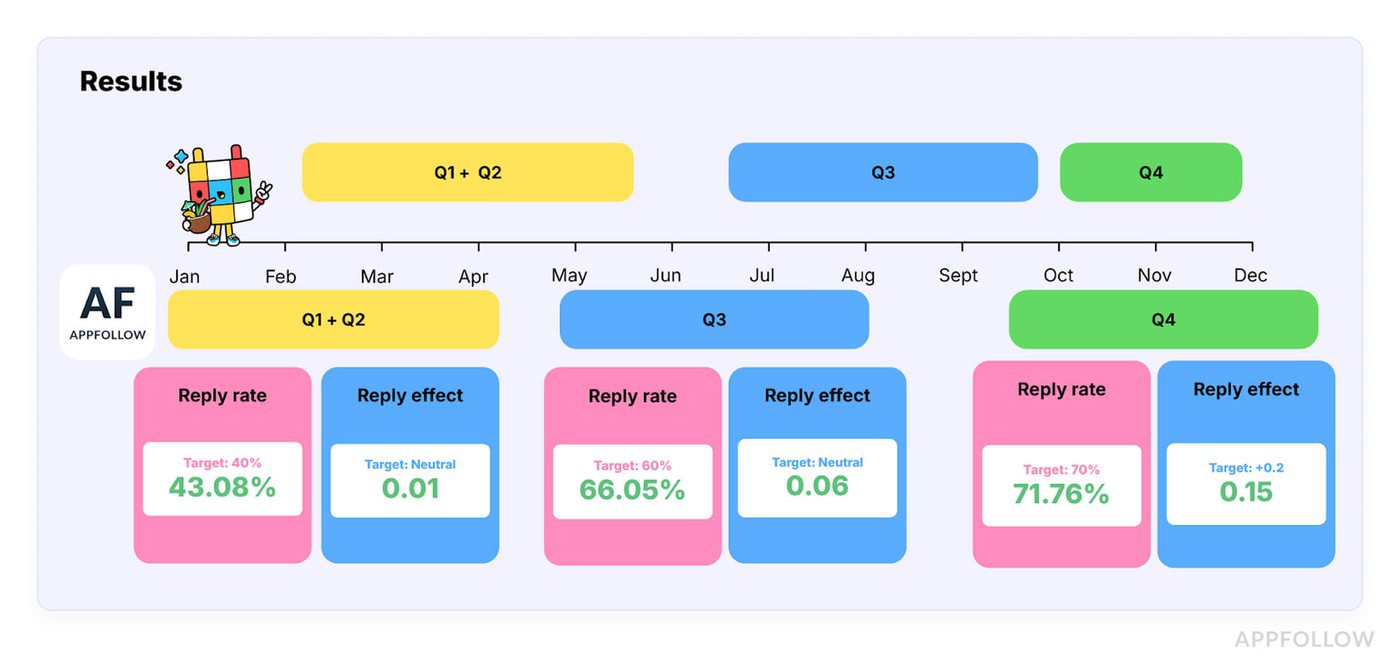
During the program, its App Store rating moved from 3.9 to 4.1 and Google Play from 4.2 to 4.3. These are results from one customer program, not a guaranteed benchmark for every app.
How we tested online reputation management software
We evaluated 15 platforms against the same buyer questions: which review sources they support, whether teams can monitor and reply from one workspace, how they categorize feedback, what automation and approval controls are available, which service-desk and collaboration tools they connect to, and how pricing scales.
Our evidence came from official product documentation, public pricing pages, integration directories, available product access, and published customer cases. The depth of access was not identical for every vendor, so we distinguish documented capabilities from features we could inspect directly. Pricing and limits can change; every figure in this article was rechecked on September 18, 2026 and should be treated as a point-in-time reference.
We prioritized app-store suitability in the recommendations. A strong local-business or ecommerce tool is not automatically a strong choice for an app team.
A practical app review management workflow
- Centralize the sources you actually use. Connect each app, store, country, and language before designing the response process.
- Segment incoming reviews. Filter by rating, sentiment, topic, app version, market, and urgency. Use consistent tags for bugs, billing, login issues, feature requests, praise, and policy concerns.
- Route work with clear ownership. Send support issues to the service team, reproducible defects to product or engineering, and sensitive cases to an approved escalation path. Use only integrations confirmed in the vendor's current directory.
- Automate narrow, repeatable cases. Templates and AI can draft or publish replies for well-defined categories, but teams should keep approval rules, exclusions, and quality checks for ambiguous or high-risk reviews.
- Close the feedback loop. Report recurring themes by version and market, link them to releases or fixes, and update response guidance when the product changes.
- Measure the system. Track review coverage, median response time, reply rate, quality-review failures, unresolved themes, rating trend, and reply effect where available.
How to choose review management software for an app team
Evaluate the product against your real review flow:
- Store coverage: Does it support every store, app, country, and language you manage?
- Reply workflow: Can authorized users reply from the platform, and are permissions and approval steps clear?
- Segmentation: Can you filter and report by rating, sentiment, topic, version, market, and language?
- Automation controls: Can you limit automation by category and confidence, require approval, and audit what was published?
- Feedback routing: Are your current support and collaboration destinations available in the official integration directory?
- Measurement: Can you track response time, reply rate, topic trends, and reply effect without manual spreadsheets?
- Governance: Are roles, access controls, data handling, and escalation paths suitable for your organization?
- Pricing fit: Are app, review, reply, user, automation, and retention limits clear at your expected volume?
15 best online review management and reputation tools
Your app’s reputation isn’t a set-it-and-forget-it deal. One bad review can spread faster than a cat meme, and if you’re not on top of it, those downloads? Poof. Gone.
Here are 15 killer tools to keep your app’s reputation spotless, your users happy, and your brand thriving across app stores and social media.
AppFollow.io
Best for: mobile teams that need app-store review monitoring, analysis, routing, and reply workflows in one workspace.
AppFollow.io is your all-in-one solution for app reviews and reputation management.

AppFollow centralizes reviews across supported app stores and helps teams filter feedback by factors such as rating, sentiment, keywords, and market. It supports multilingual reply workflows, alerts, AI-assisted summaries and replies, team reporting, and integrations with service-desk and collaboration tools.
Check the current integrations for the exact destination you need.
Features
- Review Management: Track, analyze, and respond to app store reviews in real-time.
- Sentiment Analysis: Understand user feedback at a glance.
- Performance Monitoring: Get insights on downloads, ratings, and revenue trends.
- Workflow Automation: Automate review responses and tasks to save hours.
- Custom Reports: Keep your team updated with actionable insights.
Pricing
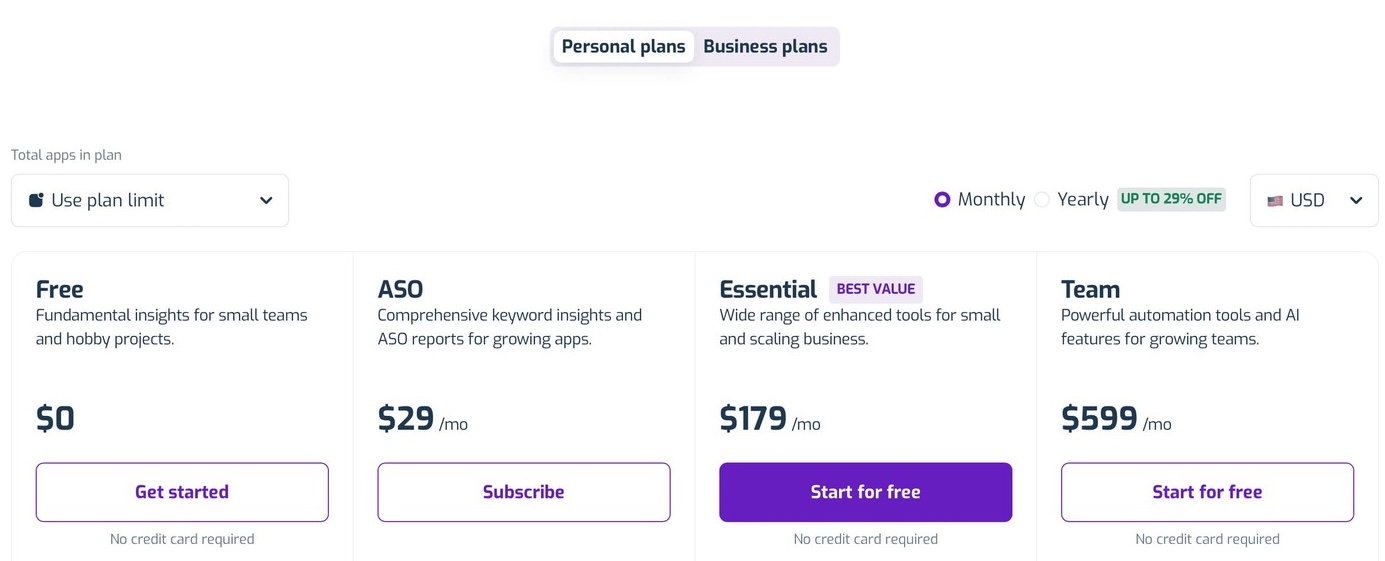
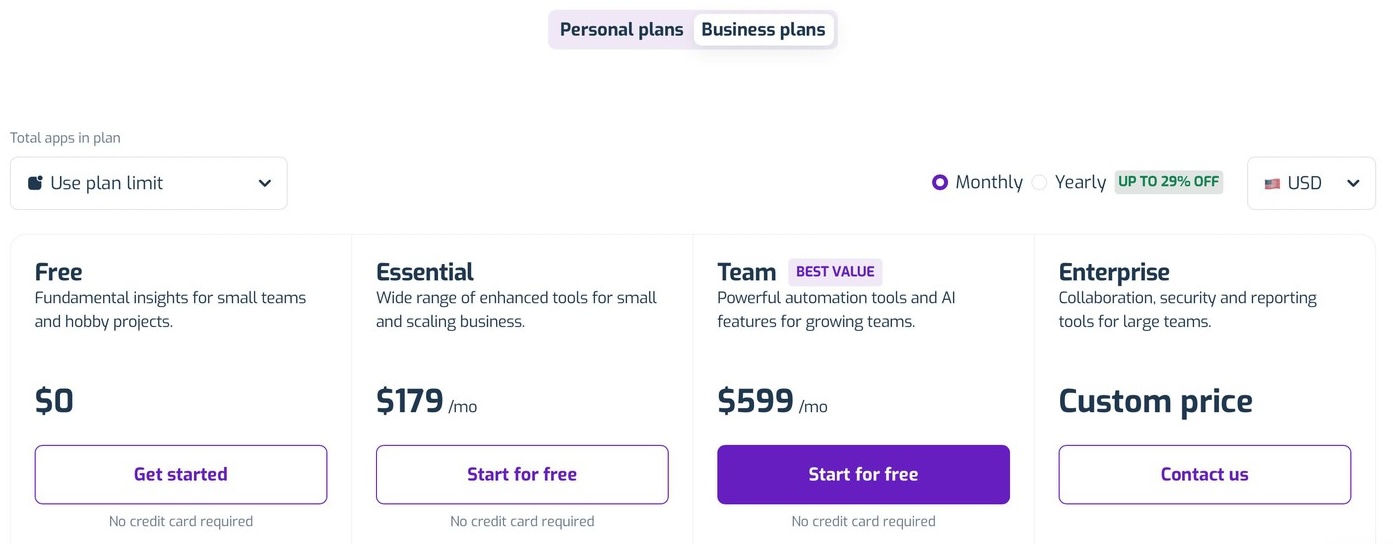
> Free Plan. $0 for basic features (up to 100 replies/month, 2 apps, 5 users).
> Essential Plan. $179/month for advanced features (500 replies, 5 apps, 5 users).
> Team Plan. $599/month for more advanced options (1,500 replies, 30 apps, 5 users).
> Business Plan. Custom pricing for large teams with premium features and dedicated support.
cta_get_started_yellow
AppFollow.io makes review management effortless — tracking feedback, automating responses, and keeping your ratings high. But it’s not the only power move in the game.
Birdeye
Best for: multi-location brands that need one reputation workflow across Google, Facebook, and local listings, with an app as a side channel.
Birdeye is your all-in-one review management and reputation powerhouse.

Image source. Birdeye dashboard.
It simplifies the process of tracking and collecting reviews from multiple platforms. It automates responses, so you never miss an opportunity to engage with customers.
Beyond just reviews, Birdeye provides in-depth sentiment analysis. This helps you monitor your brand’s online presence and make informed decisions.
Features:
- AI-powered response automation.
- Deep analytics for customer insights.
- Helps improve customer service by streamlining communication.
Pricing:

Image source. Birdeye pricing.
> Starter Plan. Priced at $299 per month per location with a prepaid annual plan, this plan includes core features like review monitoring and response capabilities.
> Growth Plan. At $399 per month per location with a prepaid annual plan, this plan adds features such as review generation campaigns, customer surveys, and social listening.
> Dominate Plan. For $449 per month per location with a prepaid annual plan, this plan offers advanced options like competitor monitoring, custom reporting, and a dedicated account manager.
Each plan is designed to meet the needs of businesses at different stages of growth, providing tools to enhance online reputation and customer engagement.
Sprout Social
Best for: teams whose reputation problem starts on social, where reviews are one input among mentions, DMs, and comments.
Not just for social media scheduling — Sprout helps manage online reviews and mentions.

Image source. Sprout Social dashboard.
Sprout Social lets you monitor brand mentions, track ratings, and respond in real time. It’s ideal for apps that want to stay ahead of the curve in managing their reputation across social media.
Features:
✅ Competitive analysis for smarter strategy.
✅ Social media engagement tracking.
✅ Easy reporting to measure your strategy’s success.
Pricing

Image source. Sprout Social pricing.
> Standard Plan. $199 per user/month (annually) or $249 (monthly) with 5 social profiles, publishing tools, review management, and a social inbox.
> Professional Plan. $299 per user/month (annually) or $399 (monthly) with unlimited profiles, competitor reporting, message tagging, and scheduling optimization.
> Advanced Plan. $399 per user/month (annually) or $499 (monthly) with AI-powered suggestions, sentiment analysis, and team productivity reports.
> Enterprise Plan. Custom pricing for larger teams with white-glove onboarding, tailored features, and priority support.
Each plan has a 30-day free trial to explore the features before committing!
Meltwater
Best for: comms and PR teams watching brand narrative and crisis signals in news and social, well beyond store ratings.

Image source. Meltdown dashboard.
Need global insights? Meltwater’s for you.
Meltwater goes beyond review management and provides real-time tracking of news, social conversations, and online reputation management trends. With AI-powered insights, it’s perfect for companies with a global footprint.
Features:
- Real-time crisis detection.
- In-depth social media monitoring.
- Comprehensive reports to guide strategic decisions.
Meltwater offers tailored pricing plans to suit various business needs:
> Essentials. Designed for smaller teams, this plan provides core products with easy implementation and 24/7 individualized training access.
> Suite. Ideal for businesses aiming to scale, this plan offers multiple solutions for cross-department impact, integrated tools for simple navigation and reporting, and the ability to scale as your teams grow.
> Enterprise. Tailored for global organizations, this plan includes a custom suite of solutions built to your needs, managed and premium services for all customer use cases, unified comprehensive datasets, and integrated solutions for all stakeholders.
Pricing is customized based on your specific requirements.
Yotpo
Best for: ecommerce apps collecting product reviews and UGC after purchase, not store feedback tied to app versions.

Image source. Yotpo dashboard.
Yotpo is perfect for e-commerce apps looking to build trust. Itspecializes in automating review management, collecting UGC (user-generated content), and loyalty programs.
Yotpo integrates seamlessly with platforms like Shopify and WooCommerce.
Features:
✅ Automates review management at scale.
✅ Integrates with your e-commerce platform.
✅ Includes features for generating customer loyalty.
Pricing:

Image source. Yotpo pricing.
> Free Plan. Ideal for startups, this plan supports up to 50 monthly orders and includes automatic review requests, email templates, and 24/7 chat support.
> Starter Plan. At $15 per month (or $144 annually), this plan accommodates up to 50 monthly orders and adds features like Google Rich Snippets and the ability to collect photos and videos.
> Pro Plan. Priced at $119 per month (or $1,068 annually), this plan supports up to 500 monthly orders and includes advanced features such as shoppable media galleries and product/shopper attributes.
> Loyalty & Referrals Pro Plan. Starting at $199 per month, this plan enables businesses to create custom-tailored loyalty and referral programs, with quick launch onboarding support.
> Premium Plans. For higher order volumes or additional features, Yotpo offers custom pricing. For example, the Premium Plan for Reviews & UGC is priced at $699 per month for up to 500 orders.
Pricing varies based on order volume and selected features.
Trustpilot
Best for: apps that need independent, verified social proof on their website while store reviews stay managed elsewhere.

Image source. Trustpilot dashboard.
Trustpilot is your ticket to third-party credibility. It collects online reviews from verified users, showcasing real customer feedback that helps build trust.
It’s the go-to tool for apps that want to display their positive reviews for all to see.
Features:
- Showcases authentic reviews for better trust.
- Improves conversion with social proof.
- Transparent and trusted platform for ratings.
Pricing:

Image source. Trustpilot pricing.
> Free Plan. Ideal for startups, this plan supports up to 50 monthly invitations and includes optimized invitation templates, e-commerce integrations, and a review collector widget.
> Plus Plan. At $259 per month, this plan offers 200 monthly invitations, 8 widgets, 3 user logins, and an ad-free profile on Trustpilot.com.
> Premium Plan. Priced at $629 per month, this plan includes 500 monthly invitations, full website widget library, 10 user logins, and profile page promotions.
> Advanced Plan. For $1,059 per month, this plan offers 5,000 monthly invitations, customizable review invitations, and 20 user logins.
> Enterprise Plan. Designed for larger organizations, this custom-priced plan includes unlimited user logins, unlimited invitations, generative AI tools, and AI review responses.
Each plan comes with a 12-month contract term, prepaid.
Reputation.com
Best for: enterprises with hundreds of locations and a procurement process, where reputation reporting rolls up to leadership.

Image source. Reputation dashboard.
Reputation.com is designed for large enterprises and businesses with multiple locations. It helps you manage reviews, track online conversations, and monitor your reputation at scale.
With powerful insights and real-time tracking, you can respond quickly and maintain a consistent brand presence across all channels.
Features:
✅ AI-driven insights and competitor tracking.
✅ Customizable dashboards.
✅ Multi-location and multi-platform management.
Pricing:

Image source. Reputation pricing.
> Fundamentals Package. Designed for up to 10 locations, this package includes core services such as the Base Platform, Reviews, Social, and Business Listings. Pricing details are available upon request.
> Basic Package. Suitable for up to 50 locations, this package offers the same core services as the Fundamentals Package. Pricing details are available upon request.
> Advanced Package. Ideal for up to 200 locations, this package includes the core services with additional features to support larger operations. Pricing details are available upon request.
For businesses with more than 200 locations or specific requirements, Reputation.com offers customized solutions.
Podium
Best for: local service businesses that ask for reviews by text message right after an in-person interaction.

Image source. Podium dashboard.
Podium makes review management a breeze. It automates review requests through SMS, so you can collect ratings and feedback without the hassle. Simple, right? But effective.
Perfect for engaging with customers on social media and making sure their voices are heard.
Features:
- SMS-based review requests.
- Boosts local SEO with customer reviews.
- Seamless communication with customers.
Pricing

Image source. Podium pricing.
> Essentials Plan. Starting at $399 per month, this plan is ideal for small businesses and includes features like SMS/text messaging, customer profiles, and team messaging.
> Pro Plan. Priced at $599 per month, this plan adds features such as multi-channel messaging, advanced analytics, and team management tools.
> Signature Plan. This customizable plan is designed for large enterprises and includes additional features like priority support, custom onboarding, and API access.
Each plan comes with a 14-day free trial, allowing you to explore the features before committing.
ReviewTrackers
Best for: brands monitoring feedback spread across dozens of third-party sites who need it aggregated in one place.

Image source. ReviewTrackers dashboard.
ReviewTrackers is your all-in-one review management dashboard. It’s perfect for apps that want to manage reviews across multiple platforms from one place.
ReviewTrackers aggregates reviews from over 100 platforms, giving you a comprehensive view of your brand’s reputation. It also offers actionable insights and sentiment analysis to help you track customer feelings and fine-tune your brand strategy.
Features:
✅ Sentiment analysis and response automation.
✅ Multi-platform integration.
✅ Powerful reporting tools for brand strategy.
Pricing:

Image source. ReviewTrackers pricing.
> Professional Plan. At $49 per month per location, this plan includes review monitoring, response management, and reporting features.
> Enterprise Plan. Priced at $59 per month per location, this plan offers advanced features such as competitor analysis and enhanced reporting capabilities.
For businesses with specific needs or larger operations, ReviewTrackers provides customized solutions. To receive a personalized quote, it's recommended to contact ReviewTrackers directly.
Each plan comes with a free trial, allowing you to explore the features before committing.
NiceJob
Best for: small businesses that want steady Google and Facebook reviews on autopilot with almost no setup.

Image source. NiceJob dashboard.
NiceJob automates review requests, sending them at the perfect time to maximize positive ratings on platforms like Google and Facebook.
It’s a simple tool with powerful results, helping you build a strong reputation and increase customer trust.
Boost your online reviews effortlessly and watch your ratings soar.
Features:
- Boosts Google and Facebook reviews.
- Simple setup for small businesses.
- Reputation-building tools that scale with your growth.
Pricing:

Image source. NiceJob pricing.
> Lite Plan. At $45 per month per location, this plan includes review generation, social sharing, and a trust badge.
> Standard Plan. Priced at $75 per month per location, this plan adds features such as automated review requests, customer profiles, and reporting.
> Lite + Convert Plan. For $145 per month per location, this plan includes all features of the Lite Plan plus a fully-managed website with landing pages.
> Standard + Convert Plan. At $175 per month per location, this plan offers all features of the Standard Plan plus a fully-managed website with landing pages.
Each plan comes with a 14-day free trial, allowing you to explore the features before committing.
GatherUp
Best for: agencies and local businesses running review requests by email and SMS with local search visibility as the goal.

Image source. GatherUp dashboard.
GatherUp makes review collection easy by automating the process and asking happy customers for feedback. It helps you enhance your local SEO while building a cycle of reviews and responses.
With powerful insights, GatherUp lets you fine-tune your review management strategy to keep your reputation strong.
Features:
✅ Review request automation via email & SMS.
✅ Optimizes local SEO with feedback integration.
✅ Collects insights to improve your business.
Pricing:

Image source. GatherUp pricing.
> Small Business Plan. At $99 per month, this plan is ideal for single-location businesses seeking essential reputation management tools.
> Multi-Location Plans. Designed for businesses with multiple locations, pricing starts at $60 per month per location. The per-location price decreases as the number of locations increases.
> Agency Plan. Tailored for digital marketing agencies, this plan offers white-label options and scalable pricing. Specific pricing details are available upon request.
All plans include features such as automated email and SMS review requests, online review monitoring across 100+ sites, Net Promoter Score (NPS) surveys, and a comprehensive reporting suite.
BrightLocal
Best for: local SEO teams that track rankings, citations, and reviews together for multiple business locations.

Image source. BrightLocal dashboard.
BrightLocal is your go-to tool for managing local SEO and reputation. It tracks online reviews, mentions, and local rankings, giving you the edge to help your app dominate search results.
The platform is tailored for multi-location businesses, allowing you to keep track of reviews across all your locations with ease. Plus, it offers in-depth reporting and customer analytics, so you can fine-tune your strategy based on real data.
Features:
- Local SEO and review management in one.
- Multi-location businesses can track reviews easily.
- In-depth reporting and customer analytics.
Pricing:

Image source. BrightLocal pricing.
> Track Plan. Starting at $39 per month, this plan is ideal for small businesses managing a single location. It includes features like local rank tracking and citation tracking.
> Manage Plan. Priced at $49 per month, this plan adds review monitoring and management capabilities, allowing businesses to monitor and respond to customer reviews.
> Grow Plan. At $59 per month, this plan offers enhanced reporting and the ability to schedule Google Posts, providing a comprehensive suite of tools for local SEO.
Each plan supports a single location, with additional locations available at an extra cost. For businesses managing multiple locations, BrightLocal offers custom plans with flexible pricing to suit larger account needs.
All plans come with a 14-day free trial, allowing you to explore the features before committing.
Grade.us
Best for: agencies managing reputation for many client brands under their own white-label dashboard.
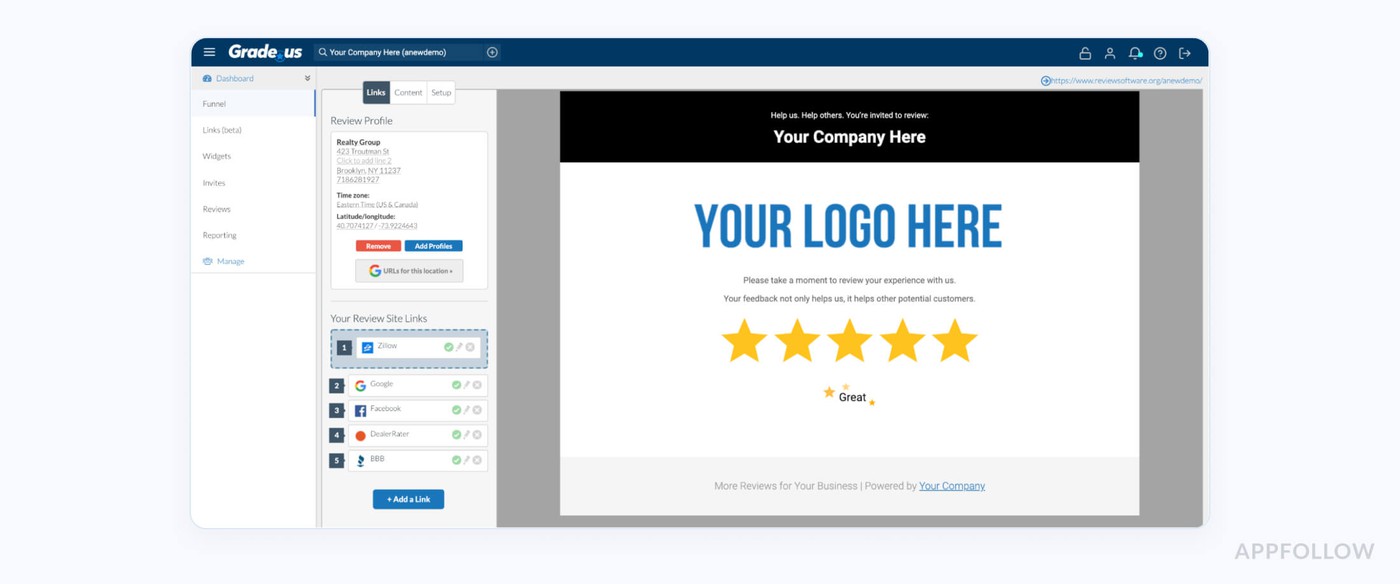
Image source. Grade.us dashboard.
Grade.us is designed to help agencies manage multiple brands from one platform.
It streamlines review management by automating the process, collecting valuable feedback, and offering white-label options. This makes it easy to maintain a consistent brand presence for all your clients.
With customizable workflows, you can optimize review requests and ensure they reach the right audience at the right time.
Features:
✅ White-label review collection tools.
✅ Multi-brand management.
✅ Customizable workflows to optimize review requests.
Pricing

Image source. Grade.us pricing.
> Solo Plan. At $110/month, this plan includes unlimited review sites, email campaigns, 200 text message requests, basic white-label options, and more.
> Professional Plan. For $180/month, this plan includes all features of the Solo Plan, plus three seats (additional at $60/month).
> Agency Plan. Starting at $360/month, this plan offers 10 seats and all features of the Professional Plan.
All plans come with a 14-day free trial.
ReviewPush
Best for: multi-location teams that only need Google, Yelp, and Facebook covered with fast alerts and replies.

Image source. ReviewPush dashboard.
ReviewPush simplifies online review management by tracking reviews across Google, Yelp, and Facebook all in one place. No more jumping between platforms — everything’s centralized.
This helps you stay on top of your reputation, whether you have one location or many. ReviewPush offers multi-location tracking so you can monitor all your spots with ease. Plus, you can respond to reviews instantly with built-in tools.
Features:
- Multi-location and multi-platform tracking.
- Centralized review monitoring.
- Response tools to stay engaged with customers.
Pricing:
> Single Location Basic. At $89 per month, this plan includes multi-site monitoring, daily email alerts, review request tools, and weekly reports.
> Single Location Premium. For $99 per month, this plan adds automatic review responses, social analytics, Twitter monitoring, competitor analysis reporting, and inappropriate/fake review flagging.
> Multiple Locations. Pricing is available upon request and includes multi-level dashboards, multi-level email alerts, store-by-store rankings, missing profile awareness, and local & regional reporting.
Each plan comes with a free trial, allowing you to explore the features before committing.
Synup
Best for: businesses fixing listing accuracy first, with review monitoring and sentiment attached to the same dashboard.
Synup is all about giving you deep insights into customer sentiment, reviews, and local listings.
With AI-backed tools, it analyzes every detail of your reputation, helping you make data-driven decisions. It’s perfect for businesses looking to stay ahead of the curve.
Manage all your listings and reviews with ease, and boost your local SEO at the same time, and get real-time analysis and adjust your strategy based on online feedback.

Image source. Synup dashboard.
Features:
✅ AI-driven reputation insights.
✅ Manages listings, reviews, and local SEO.
✅ Centralized management dashboard for all your data.
Pricing:

Image source. Synup pricing.
- Single Location Plan. Starts around $34.99/month, covering listings, analytics, reviews, and social media management.
- Multiple Locations. Pricing is customized for businesses with several locations and includes advanced features like multi-level dashboards and store-specific reporting.
For exact pricing and additional features, it's best to contact Synup directly or start with a free demo.
Your app’s reputation isn’t something you can just hope will stay intact. Choose the right tool, build a strategy, and watch your app thrive. Whether you need to manage reviews, track ratings, or engage with users on social media, these tools give you the power to protect and grow your online presence — one step at a time.
Don’t have time to test all of these online review management tools?
Explain your company needs to our reputation management expert.
Managing your app’s reputation doesn’t have to be a guessing game—or a full-time job. Instead of drowning in endless reviews, platforms, and feature comparisons, let an AppFollow reputation management expert do the heavy lifting for you.
Book a FREE 30-minute call and get:
- A deep dive into your app’s goals, needs, and current review strategy.
- A tailored solution—no generic advice, just the right ORM tools for your growth.
- Insights on how to consolidate reviews, track sentiment, and respond in real-time.
- Expert recommendations on integrations with Sprout Social, Birdeye, Meltwater & more.
Book your free session now and turn your app reviews into a growth machine.
cta_demo_request_yellow
FAQs about online reputation management and review management
What is app reputation management?
App reputation management is the ongoing work of monitoring ratings and reviews, responding to users, identifying recurring product issues, and measuring how those signals change across stores, markets, and releases.
What is the difference between review management and reputation management?
Review management covers the operational workflow for collecting, analyzing, routing, and replying to reviews. Reputation management is broader and also includes product quality, customer support, ratings, public responses, and brand conversations.
Which review sources should an app team prioritize?
Start with the stores that generate your installs and review volume. Verify coverage for each app, country, language, and store before comparing automation or analytics features.
Can app-review replies be automated safely?
Yes, for narrow and repeatable cases with clear rules. Use templates or AI drafts with exclusions, approval controls, audit history, and human review for ambiguous, sensitive, or high-risk feedback.
Which metrics should a review-management program track?
Track review coverage, response time, reply rate, unresolved negative themes, rating by version and market, quality-control failures, and reply effect where the store and platform make it available.
Is a local-business review tool suitable for app-store reviews?
Sometimes, but only if it supports the app stores, filters, reply permissions, integrations, and app-level reporting you need. A strong Google Business Profile workflow does not automatically translate into a strong App Store or Google Play workflow.
Read also
- Check out this guide on reputation automation.
- Track your competitors and protect your app rankings with app marketing intelligence.