Best online reputation management software in 2026: 15 tools we actually logged into


Table of Content:
- TL;DR
- Why trust this review
- What is reputation management software?
- How we tested review management software
- How to choose the best online reputation management software: characteristics
- AppFollow review and reputation management software
- Birdeye
- Mention reputation management tool
- AppTweak
- Sprout Social
- Podium
- Brand24
- Qualtrics
- #Reputation.com
- Statusbrew
- Reputation management software comparison: best tools by use case
- Read also
Last updated August 17, 2026 · Written by Olivia Doboaca, ASO Content Lead · Reviewed by Yaroslav Rudnitskiy, Senior Professional Services Manager, AppFollow
Short answer: pick by where your reviews live.
- AppFollow handles App Store and Google Play at scale.
- Birdeye and Reputology suit multi-location local brands.
- ReviewTrackers covers enterprise reporting.
- Brandwatch and YouScan do social listening rather than review replies.
- AppReviewBot pushes store reviews into Slack from $19 a month. Prices, sources, and limits sit in the table below.
Most reputation tools sell you the same screenshot. One inbox, all your reviews, sentiment in a donut chart. Prices run from $19 to $499 a month for what looks like an identical promise.
The difference shows up on day three of a trial, when you try to pull two years of review history and discover the import caps at ninety days. Or when the AI reply drafts arrive in a voice nobody at your company has ever used. Or when you learn the platform covers Google Business Profile beautifully and treats the App Store as an afterthought.
We spent seven hours inside fifteen platforms in trials, with real review data, doing the things a support lead does on a Tuesday. What follows is what held up.
One structural note that matters more than any feature list. Where your reviews live determines which tool you need, and the market splits cleanly into three groups that rarely overlap: app store platforms, local and multi-location platforms, and social listening platforms. Buying across that line is the most common expensive mistake in this category.
TL;DR
Here’s the fast version. Pick the tool based on where your reviews live, how many you manage, and how much automation your team actually needs.
| Tool | Best for |
|---|---|
| AppFollow | App teams managing App Store and Google Play reviews at scale |
| Appbot | Client-ready review reporting |
| AppReviewBot | Budget-friendly app review alerts |
| Birdeye | Multi-location businesses |
| ReviewFlowz | SMBs managing reviews from multiple platforms |
| Sprout Social | Teams that handle reviews inside social workflows |
| Review Trackers | Enterprise review reporting |
| YouScan | Visual social listening and review monitoring |
| Determ | Simple monitoring and alerts |
| Reputology | Hospitality, healthcare, and retail operations |
| Brandwatch | Enterprise consumer intelligence |
| App Radar | App teams that want reviews next to ASO data |
Best overall for mobile app teams: AppFollow.
Best low-cost alert setup: AppReviewBot.
Best for local reputation teams: Birdeye or Reputology.
Best for enterprise brand intelligence: Brandwatch.
Best for review reporting: Appbot.
Why trust this review
AppFollow makes one of the tools on this list. So here is the disclosure up front, and here is what we did to keep the comparison honest.
No vendor paid for placement here, and no affiliate links appear anywhere on this page. AppFollow loses in this comparison on local business reviews, on social listening, and on enterprise multi-location reporting, and the copy below says so in each case.
Who ran the test. Written by Olivia Doboaca, ASO Content Lead at AppFollow. Reviewed by Yaroslav Rudnitskiy, Senior Professional Services Manager, who has run review workflows for app teams handling six-figure monthly review volumes.
What we did. Fifteen trial accounts. Seven hours of hands-on work. For each platform we imported review history where the product allowed it, filtered by rating and topic, tested tagging, drafted replies, set up an automation rule, configured an alert, and exported a report. Then we tried to break the thing that the pricing page bragged about.
What we checked outside the product. Pricing pages, public documentation, integration directories, trial limits, export options, and security notes. Ratings quoted below come from G2, Capterra, and Trustpilot, each linked at the tool where it appears.
Dates. Tested and re-priced August 2026. We re-check pricing quarterly, because in this category it moves.
What is reputation management software?
Reputation management software collects reviews, ratings, and mentions of your brand from across the web into one workspace, then helps you reply, tag, analyze, and report on them. Coverage varies by platform: some pull app store reviews, some pull local listings and Google Business Profile, some pull social and news. Pricing runs from about $19 a month to enterprise contracts.
Vendors label the same category six different ways, which makes shortlisting harder than it should be. A reputation management platform, a reputation management system, an online reputation management solution, and a reputation management program describe roughly identical products. A reputation management app usually means the same thing with a mobile client attached. Plain reputation software is the shortest label and the vaguest. None of these words signals a real difference in capability, so ignore them and read the source list instead.
One distinction does carry weight, and it is the one buyers get wrong most often.
Review management covers collecting and responding to reviews on stores, marketplaces, and directories. Scope is narrow and the work is operational.
Reputation management wraps that and adds social mentions, news coverage, forums, and search results, which is a communications job as much as a support one. Teams almost always need the first before the second. Buying a listening platform when your actual problem is 400 unanswered Play Store reviews is an expensive way to learn that.
The three kinds of reputation management software (and why buying the wrong one hurts)
Vendors will not draw this map for you, because every one of them wants to look like the whole market. Here it is anyway.
| Category | Pulls reviews from | Built for | Tools in this group |
|---|---|---|---|
| App store platforms | App Store, Google Play, Amazon Appstore, Microsoft Store | Mobile product, support, and ASO teams | AppFollow, Appbot, AppReviewBot, App Radar |
| Local and multi-location | Google Business Profile, Yelp, Facebook, TripAdvisor, BBB, industry directories | Restaurants, clinics, retail, franchises, agencies serving them | Birdeye, Reputology, ReviewTrackers, Podium, Reputation.com |
| Social listening and media | X, Instagram, TikTok, Reddit, news, blogs, forums | PR, comms, and brand teams | Brandwatch, YouScan, Determ, Sprout Social, Brand24 |
| B2B software reviews | G2, Capterra, Trustpilot, TrustRadius | SaaS customer marketing | ReviewFlowz |
Only the first two columns count as a review management platform in the strict sense, since those are the ones built to reply at volume. The third listens.
Three quick gut checks before you book a demo:
- If your worst reviews arrive in the Play Store and your shortlist is Birdeye and Podium, you are shopping in the wrong aisle.
- If you run forty dental clinics and your shortlist is Appbot, same problem in reverse.
- If nobody on your team replies to reviews and you only need to know what people are saying, a listening tool costs less than a review platform and does that job better.
Crossing categories is possible. Sprout Social and ReviewTrackers both stretch. Depth drops at the edges every time, so check the source list before the feature list.
How we tested review management software
We tested 12 review management software platforms the way an app team would actually use them, not the way a vendor demo shows them.
Over 7 hands-on hours, our team set up trial accounts, imported review history where the product allowed it, filtered reviews by rating and topic, tested tagging, drafted replies, checked automation rules, reviewed alert settings, and looked at how each platform handled reporting.
For app-focused tools, we paid close attention to App Store and Google Play review workflows. For broader reputation platforms, we checked how well they handled sources like Google Business Profile, Trustpilot, social channels, and location-based review flows.
We also checked the boring-but-important stuff: pricing pages, public documentation, integration lists, security notes, trial limits, export options, and whether the product could realistically fit into a support, ASO, or customer experience workflow without creating extra manual work.
To avoid relying only on our own testing, we compared our notes with real user feedback from G2, Capterra, and Trustpilot. That helped us catch repeated patterns: slow onboarding, missing integrations, confusing dashboards, weak AI replies, pricing surprises, and features that looked stronger on the website than they felt inside the product.
Tested: May 1–14, 2026
Tools trialed: 12
Hands-on testing: 7 hours
Review sources: first-hand trials, product documentation, pricing pages, G2, Capterra, Trustpilot
Testing focus: review import, tagging, reply workflows, AI assistance, automation, alerts, integrations, reporting, pricing transparency, and fit for app teams
The final list below reflects what we could validate through hands-on testing, public product data, and recurring feedback from real users.
How to choose the best online reputation management software: characteristics
A reputation tool isn’t just there to look slick. It needs to work. Help you get more downloads, keep your ratings high, and make review management effortless. If it’s not doing that? Swipe left.
Here’s what I’d focus on if I were you:
- Real-time alerts. You miss a nasty review? That’s a chunk of your conversion rate out the window. The good tools ping you the second your app gets mentioned.
- AI-powered sentiment detection. You don’t have time to read every single review. Let the tool do the emotional labor and flag what needs your attention (and what can wait).
- Smart reply suggestions. The best ones actually write the first draft of your reply, right there in the response box. Like an assistant who knows your tone and just gets it.
- Quick-fire responses with pre-loaded templates = rapid, professional replies. No more scrambling for words.
- Analytics hookup. Link to store data. Watch how reviews drive downloads. Make choices that work.
- Auto-review requests. Happy users = better ratings. Get tools that nudge satisfied customers to speak up.
On top of that, there should always be room to grow. Free tools work today. But serious apps need serious features. Pick something that scales.
When you choose wisely, managing your app’s reputation becomes smooth, effective, and even fun. And here are the best tools that meet these requirements!
AppFollow review and reputation management software
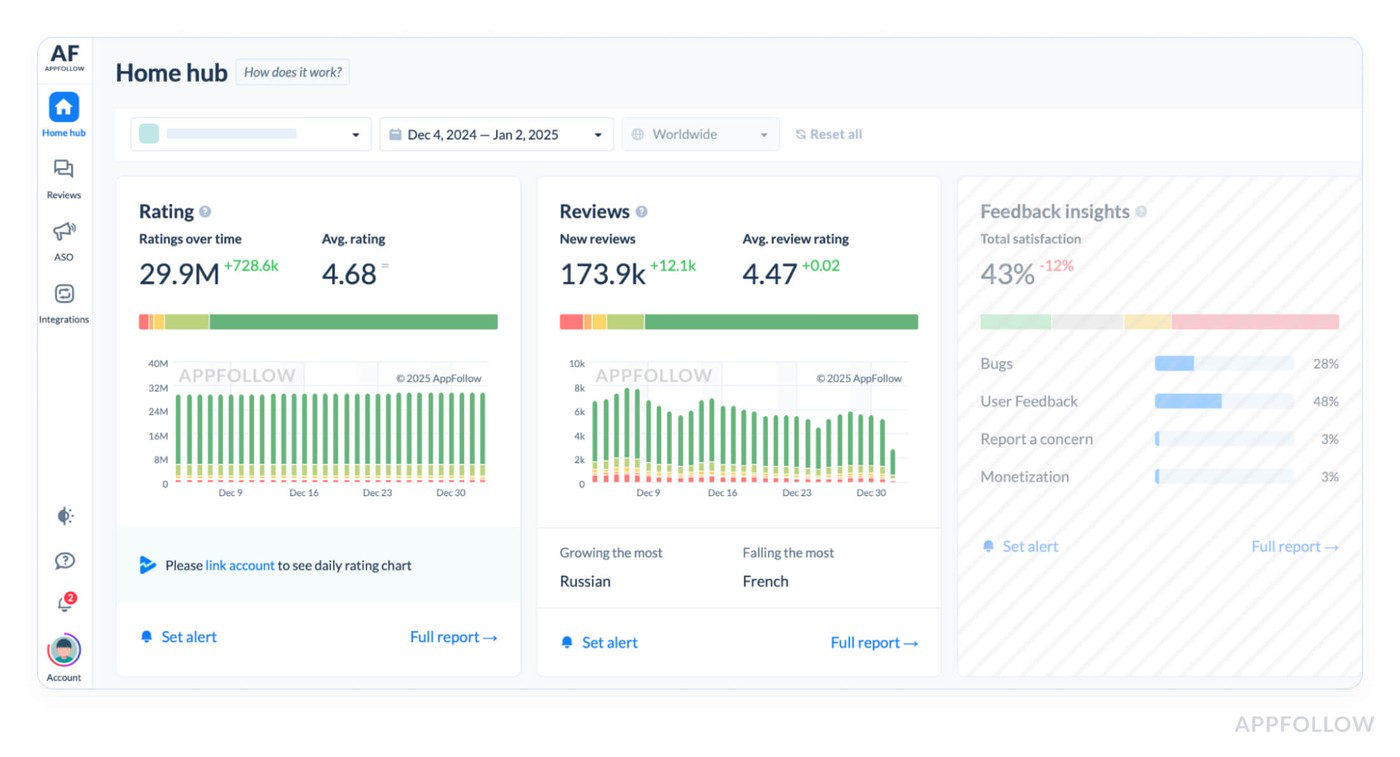
Want a perfect tool for juggling app reviews, bug complaints, and trying to keep your brand voice consistent across all the stores? AppFollow is your savior.
This is the reputation management software teams like ours need. Big names like Opera, Discord, and Gameloft are already using it to track what people are saying on the app stores and social media, and respond at scale. Everything’s pulled into one dashboard, so you’re not bouncing between platforms like a maniac.
It’s not just another online reputation software either. It’s like your app’s bodyguard — it catches drama early, automates your replies, and helps you stay in control before anything explodes.
Features that make AppFollow a total game-changer for an app business:
- AI-Powered Review Management. You can sort, reply, and even auto-respond to reviews with templates or AI. It flags the nasty stuff, too, so your brand always shows up polished.
- Workflow Automation. It plugs into Slack, Zendesk, whatever you’re using and cuts response time way down.
- App Monitor. Gives you juicy insights from your users and your competitors. You’ll see exactly what to fix — or brag about.
- ASO Tools. Their market intel helps tailor your messaging and boosts visibility without burning ad budget.
- Sentiment Analysis. At-a-glance vibes check your reviews so you can prioritize without drowning in feedback.
- Custom Alerts. Get pinged when your rating spikes or tanks — because no one wants a surprise meltdown.
- Competitor Tracking. Keep tabs on what the other apps are doing (and what they’re screwing up). Total review management software power move.
It’s how you spot stuff like “Crashes on Android 14” before support tickets pile up or catch those “Dark mode is fire” moments that make your dev team feel like rockstars.
Trust me, if you're serious about keeping your app’s rep solid, this is the tool.
Pricing
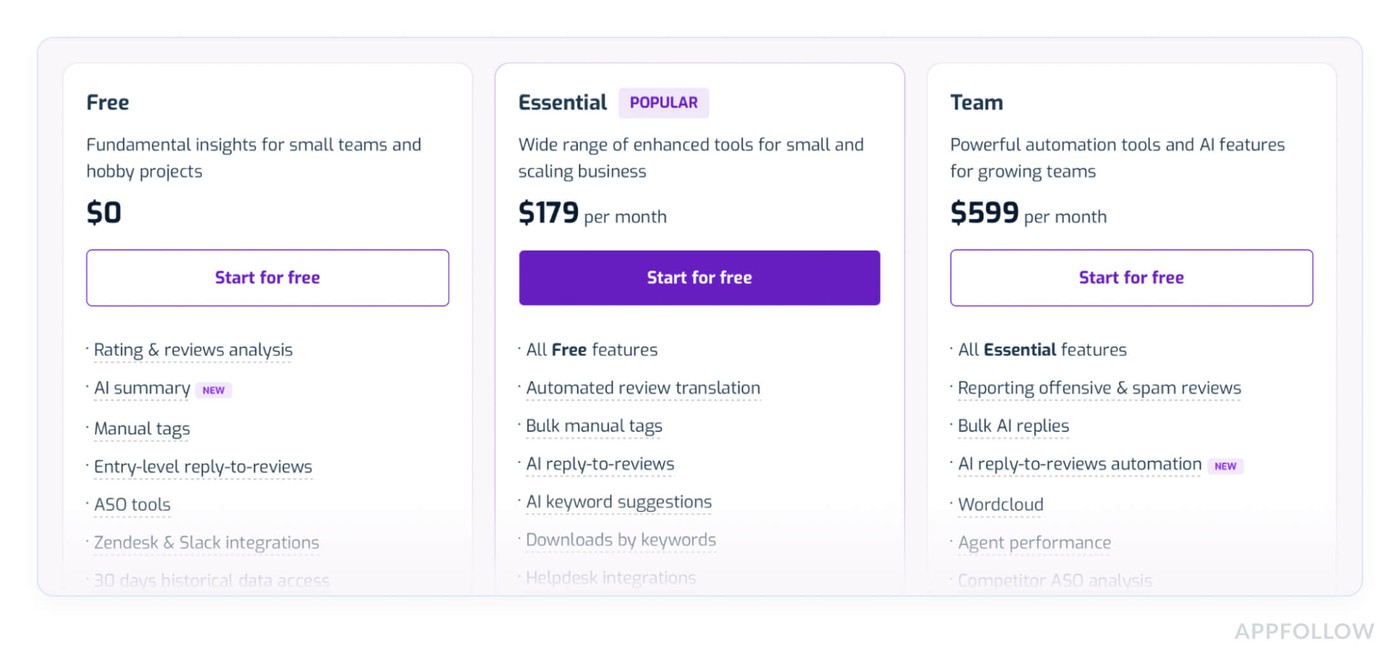
AppFollow review management platform pricing.
AppFollow starts at around $55/month and is honestly one of the best review software for small businesses. Their pricing model is based on how many apps, reviews, and users you track. If you're a small business, the Essential plan gives you solid reputation tracking and review tools. Bigger teams needing more automation and social integrations usually go for Pro or Enterprise.
It’s perfect for managing customer feedback, improving content, and protecting your online reputation.
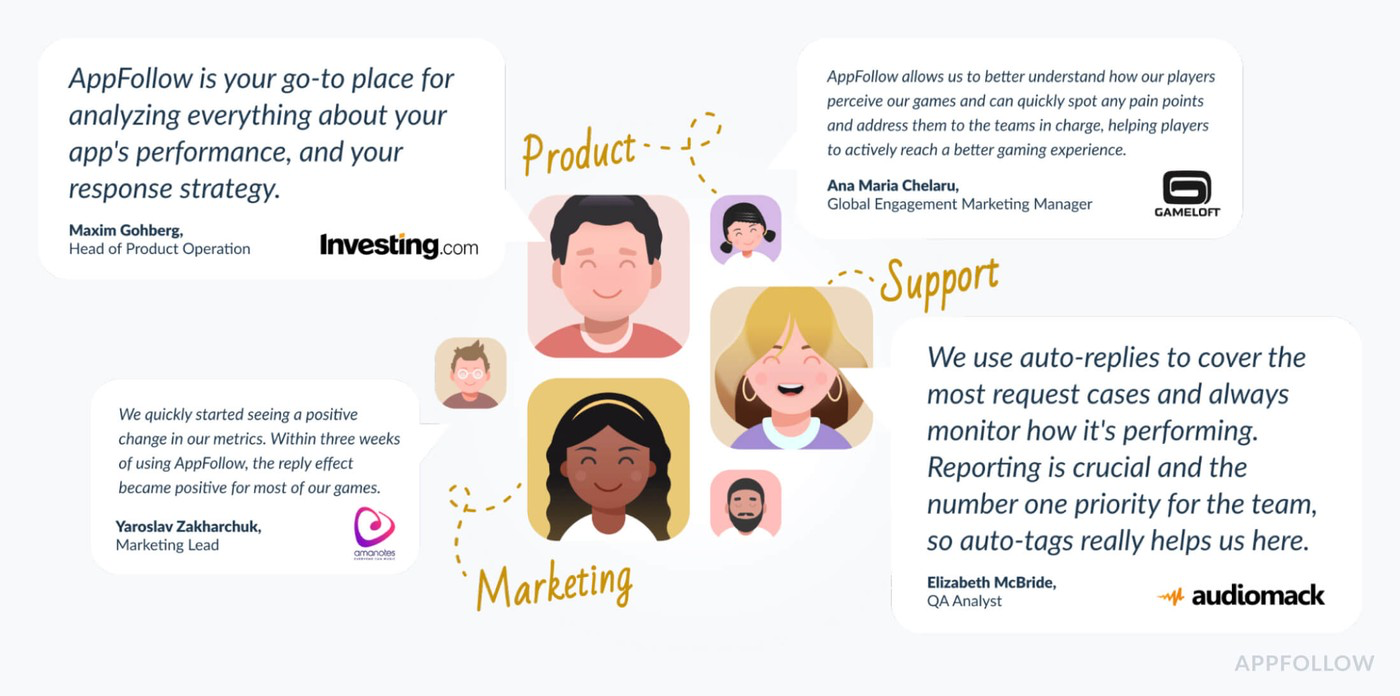
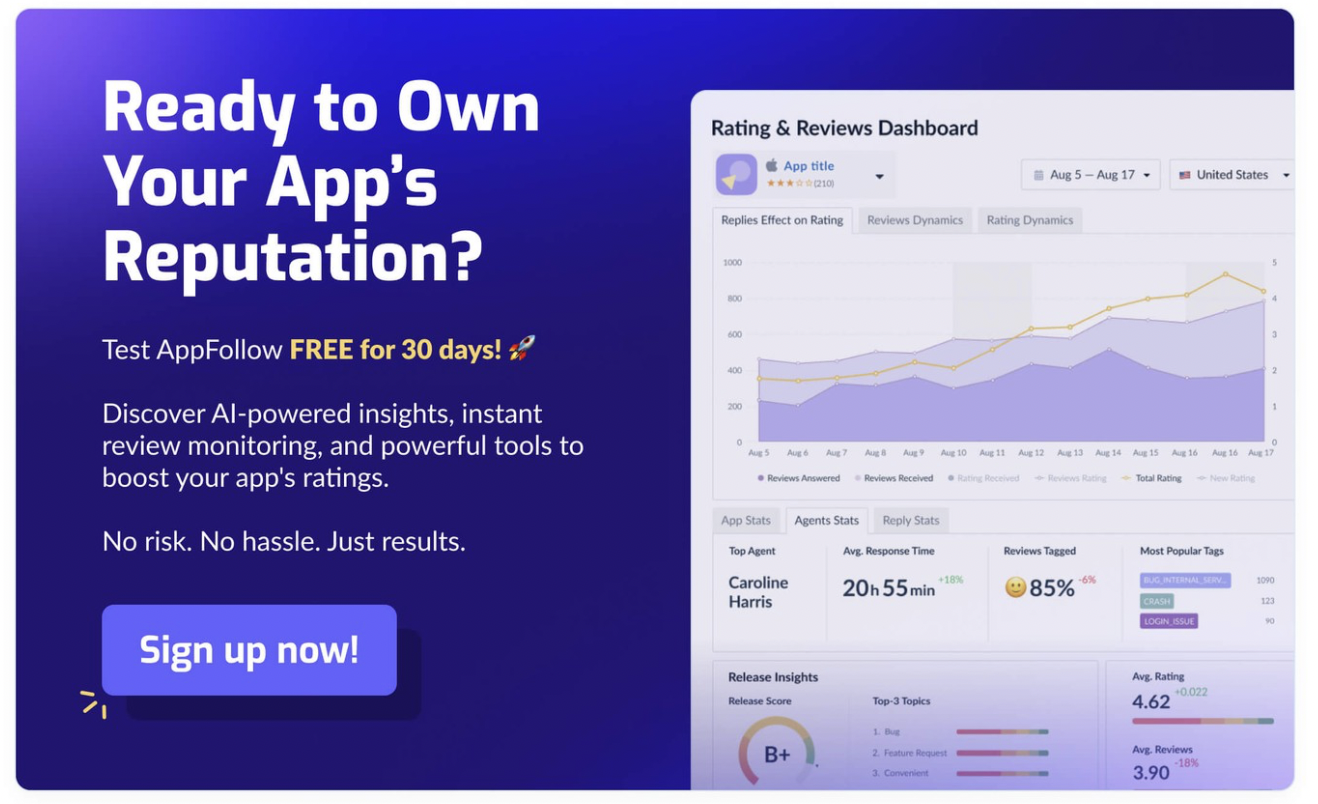
Here is what AppFollow users say:
Birdeye
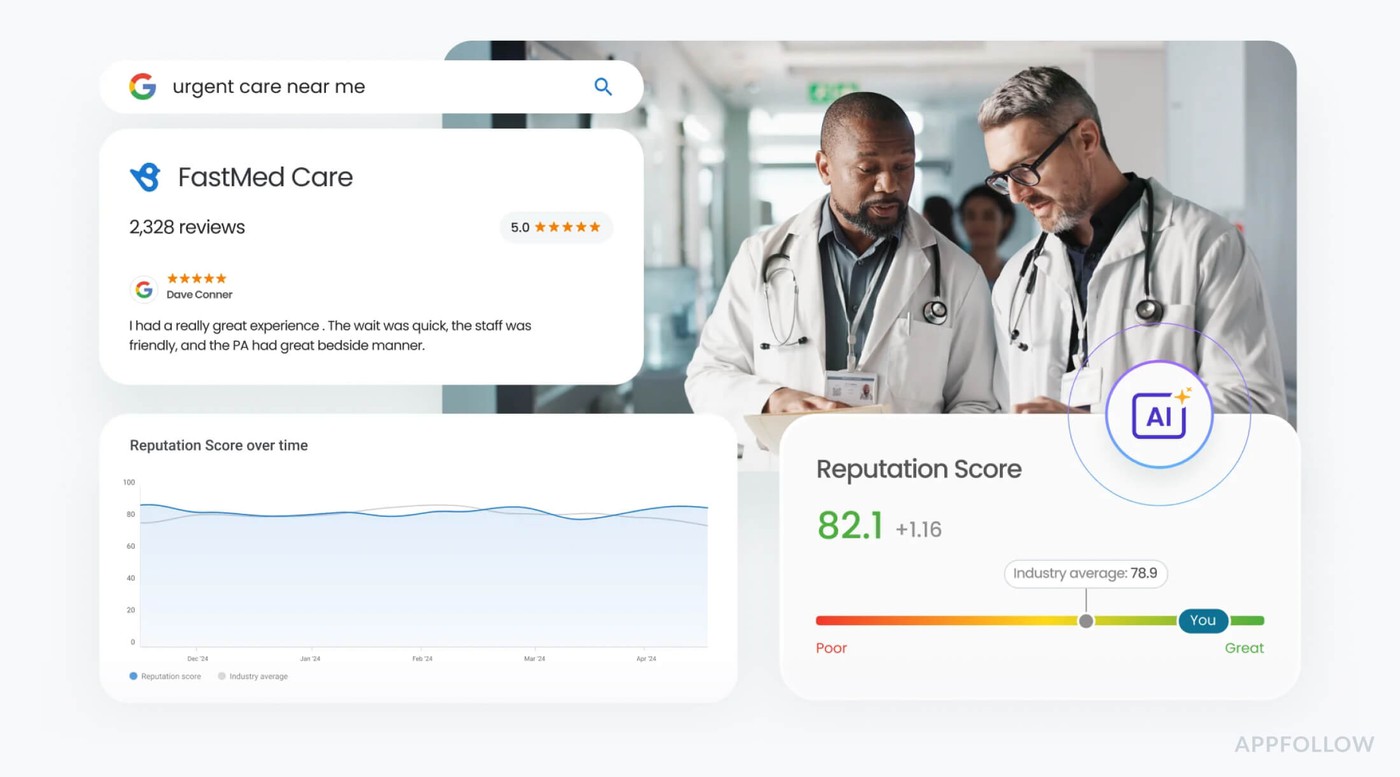
Birdeye manages app reputation across review sites and social platforms. It automates review collection and response workflows to build trust and visibility.
Target users: Businesses wanting higher local search rankings and customer loyalty.
Key Features
- AI-driven review generation and response across Google, Facebook, and other platforms
- Automated social media post scheduling and performance tracking
- Business listing optimization to improve local search rankings
- AI survey tools collect and analyze customer feedback efficiently
- Single dashboard manages all customer messages across text, chat, email, and social
Pricing
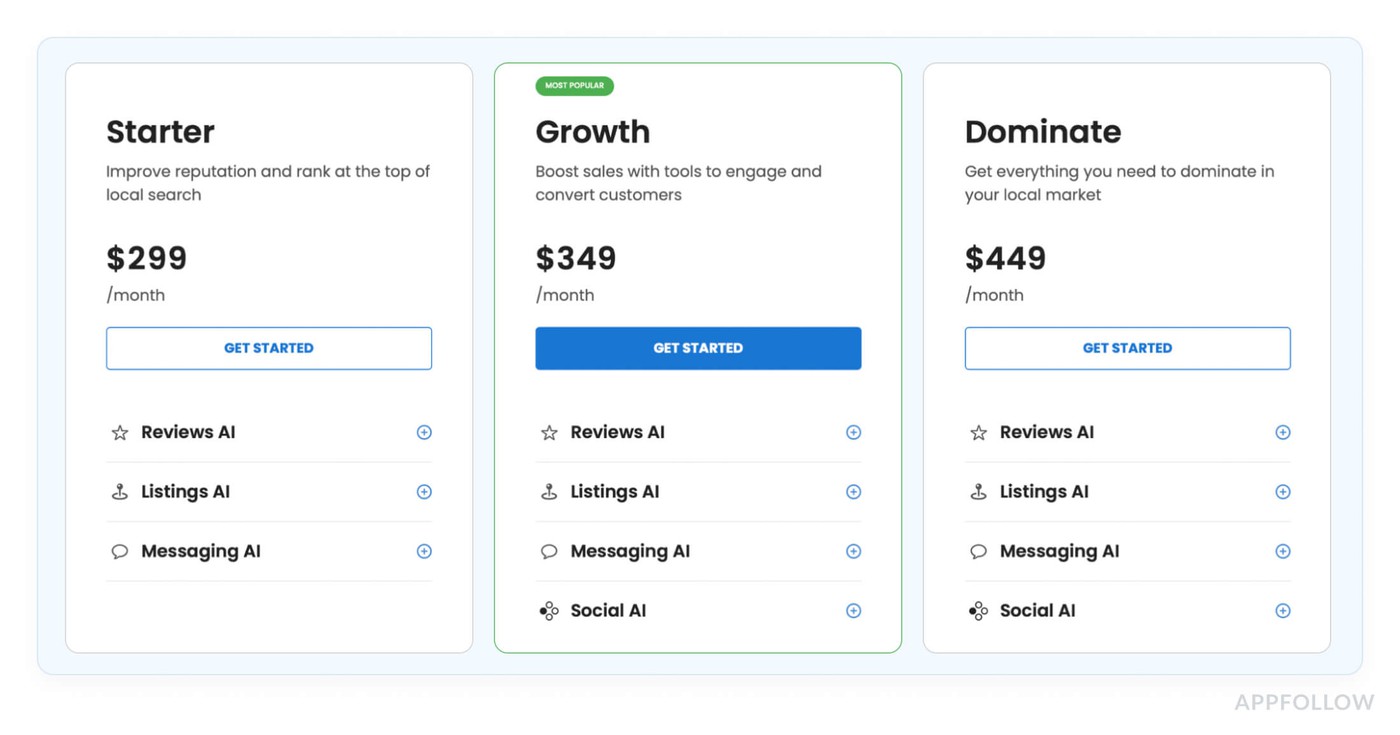
The Starter Plan begins at $299 per location per month (billed annually) and includes Reviews AI, Listings AI, and Messaging AI — perfect for building your reputation and SEO.
The Growth Plan is available at $399 per location per month (billed annually), adding Social AI to help you engage and convert customers effectively.
For those aiming to dooooominate! the market, the Dominate Plan offers comprehensive features at $449 per location per month (billed annually), including Chatbot AI for enhanced customer interaction.
Birdeye provides a 30-day free trial for its Social AI features, allowing you to experience the platform's capabilities firsthand before making a commitment.
Mention reputation management tool
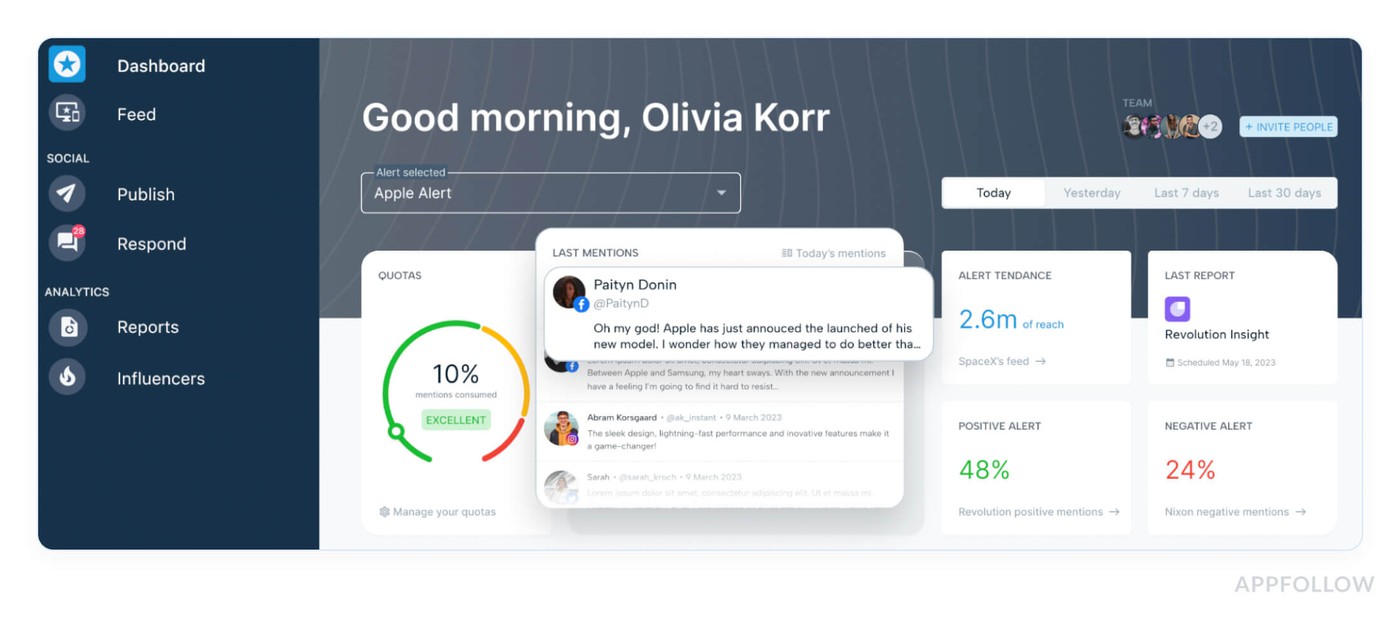
It’s one of the most powerful online reputation management software tools I’ve used. It’s built for both enterprise and scale-hungry indie teams.
Here’s the deal. Mention helps brands like Microsoft, Dominos, and Ogilvy track and manage their online media presence across social media, forums, blogs, and news outlets. For app marketers and devs, that means real-time visibility into how users talk about your app, bugs, crashes, feature requests, or love notes. You can jump in before it affects your ratings.
It integrates with Twitter, Instagram, Facebook, LinkedIn, Reddit, YouTube, and Google News. You can monitor mentions, analyze sentiment, and reply—all from one dashboard. It’s honestly the best review software for small businesses too. It simplifies review management without needing a big team.
Features
- Real-time mention tracking
- Sentiment analysis (flag those “this update ruined everything” moments)
- Alerts for spikes in negative or positive mentions
- Shared inboxes + workflow tools for fast team response
- Competitor comparison dashboards
What sets Mention apart is how actionable it is. It’s not just a listening tool. It’s built to act fast. Whether it’s a one-star review tanking your average or a trending Reddit post about your app’s glitch, you’re on top of it.
TL;DR: If you’re serious about protecting your app’s online reputation, Mention is your secret weapon.
Pricing
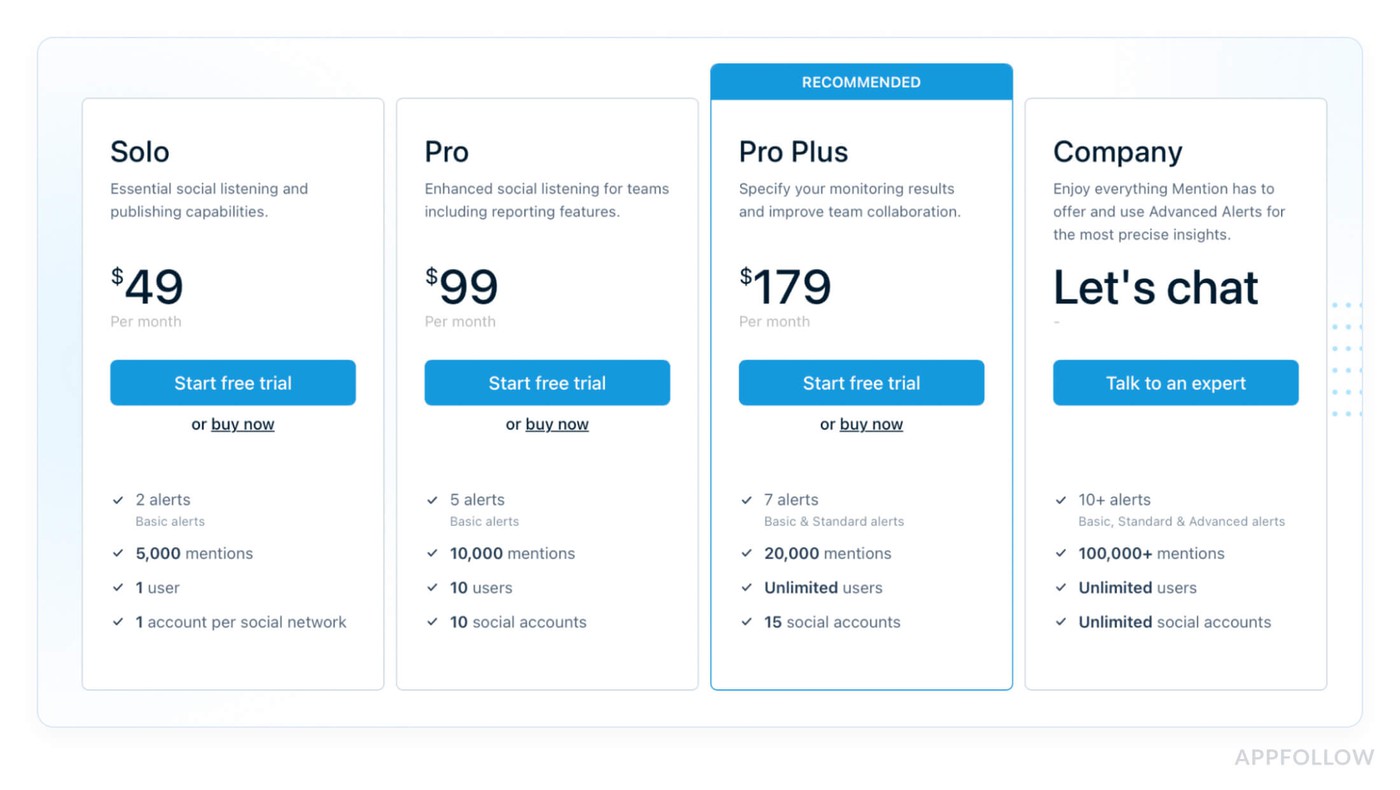
Mention.com starts at around $49/month. It’s an online review management platform that helps you monitor your app’s brand mentions across social media and online media - super useful when you need to stay ahead of bugs, crashes, or user love/hate in reviews.
The pricing depends on how many alerts, mentions, and users you need. For indie app teams, the Starter plan is enough. Bigger teams managing global online reputation go for Pro or ProPlus.
You get a 14-day free trial to test the tool.
AppTweak
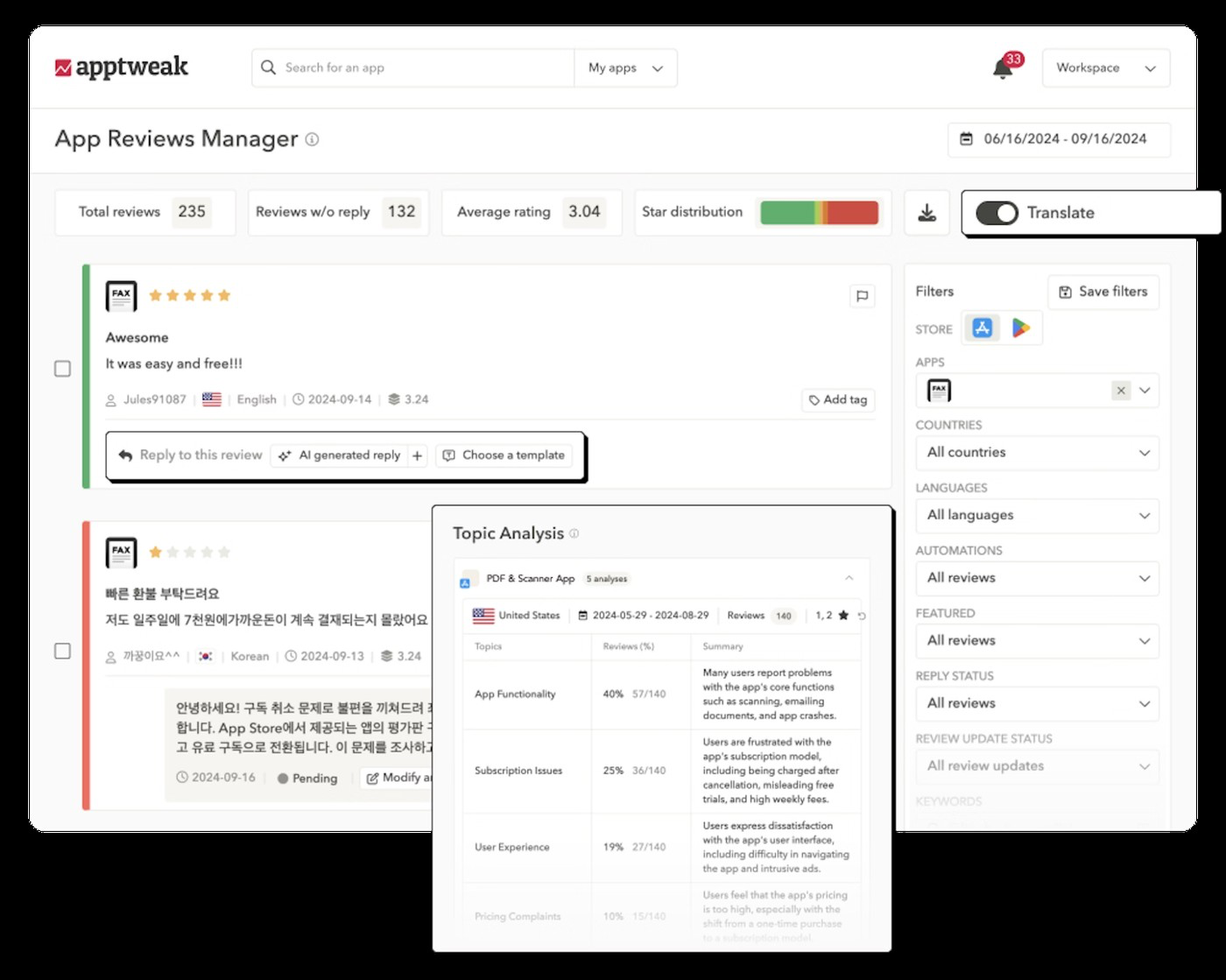
If you’re not using AppTweak yet, you’re seriously sleeping on one of the smartest online reputation management tools for apps. It’s a top-tier tool built specifically for app marketers and devs who need full control over their app’s brand image, online presence, and user feedback.
AppTweak is known for its deep ASO and app performance insights, but what sets it apart is how it handles reputation. Major business players like Yelp, Voodoo, and Deezer use it to track content, analyze reviews, and improve how customers perceive their apps in competitive marketplaces.
This thing plugs straight into all the major app stores, so you’re not jumping between a million tabs. You get one clean dashboard where you can track the vibe, social media buzz, app ratings, review trends - all of it. No switching tools, no wasted time, just total control over what your users are saying and how you respond.
Features
Here’s why this tool is worth it if you’re serious about keeping your app’s rep squeaky clean:
- You can see every review from every store in one place. No tab chaos.
- It reads the vibe for you — automated sentiment analysis keeps tabs on user moods.
- Keyword tracking (like “crash” or “love the update”) will help you spot patterns fast.
- Competitor analysis is a great solution if you lack growth ideas.
- Track your users' reviews after each update.
- Get alerts exactly when your rating takes a weird turn.
So when bugs, crashes, or random drama hit, you're not scrambling to fix things; you’re already on it. And if your app’s global? It’s got a multilingual sentiment decoding reviews from every user.
This is real-deal review management. If you’re eyeing AppTweak, I’d say yes. It helps you fix faster, grow smarter, and use feedback to level up.
Pricing

AppTweak starts at $99/month. The pricing model is based on the number of apps, markets, and features like ASO, ad insights, and monitoring tools. It’s perfect for small teams, while bigger businesses or those managing multiple apps go for higher tiers.
It also works great as reputation management software for agencies handling several customers. You get access to powerful reputation management tools without needing a huge team.
There’s a 7-day free trial to explore it all.
Sprout Social
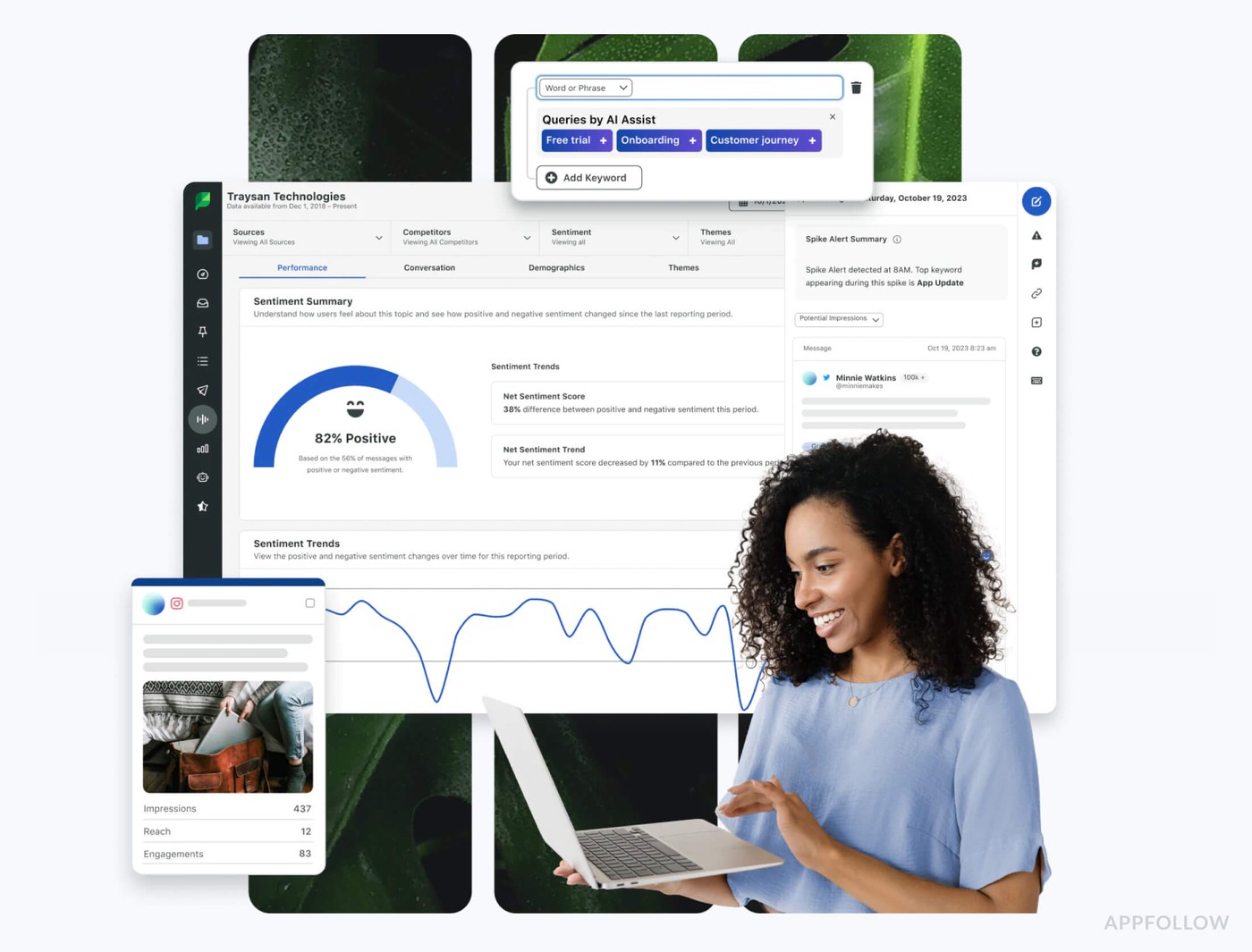
Sprout Social is a great rep management software for keeping your app’s rep shiny on social media and app stores.
It’s made for teams who want to step up their social game without the mess. You can schedule posts, track every mention, and see how your content’s really performing — all in one slick dashboard. No guessing, no chaos.
Here’s what makes it super handy:
- One dashboard to rule them all: manage posts, comments, and DMs across every platform
- Real-time alerts when someone’s talking about your brand (good or shady)
- Smart analytics that actually show what’s working
- Auto-scheduling that doesn’t make you babysit every post
- Built-in tools to help your team respond like a total PR dream squad
Honestly, if your app’s visibility and user engagement need a glow-up, Sprout Social gets it done — and yeah, the name’s kinda adorable too.
Pricing
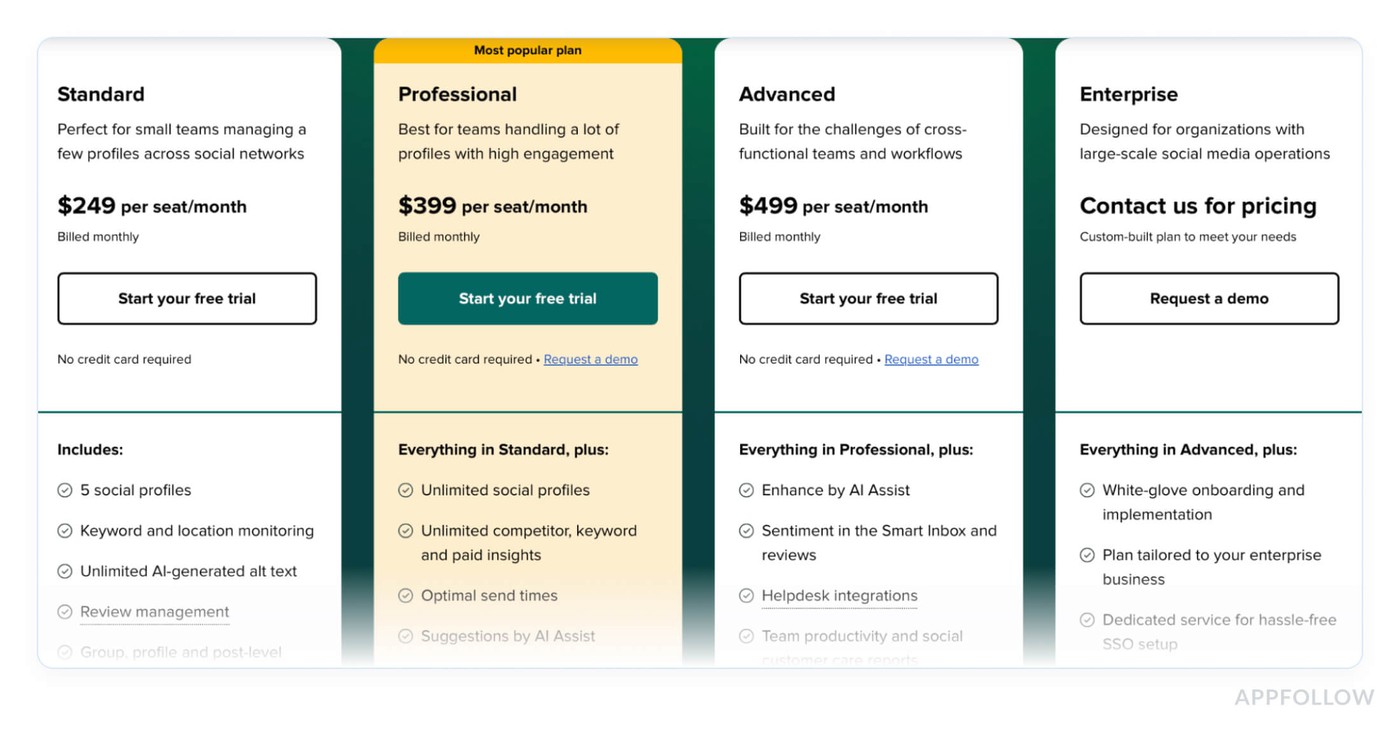
Their Standard Plan of this review management software starts at $249/month per user - great if you’re a small team just juggling a few profiles. But if you’re managing a bunch of accounts with tons of engagement flying in, the Professional Plan is $399/month per user, and it’s built for teams who are in it daily.
So yeah, it’s an investment, but if your app lives and breathes on social, it might be totally worth it.
For more advanced needs, the Advanced Plan is available at $499 per user per month, with enhanced features for cross-functional teams.
Sprout Social provides a 30-day free trial, something for you to explore its capabilities before committing.
Sprout Social = proper tools for online reputation management, effective social media engagement, and reputation enhancement.
Podium
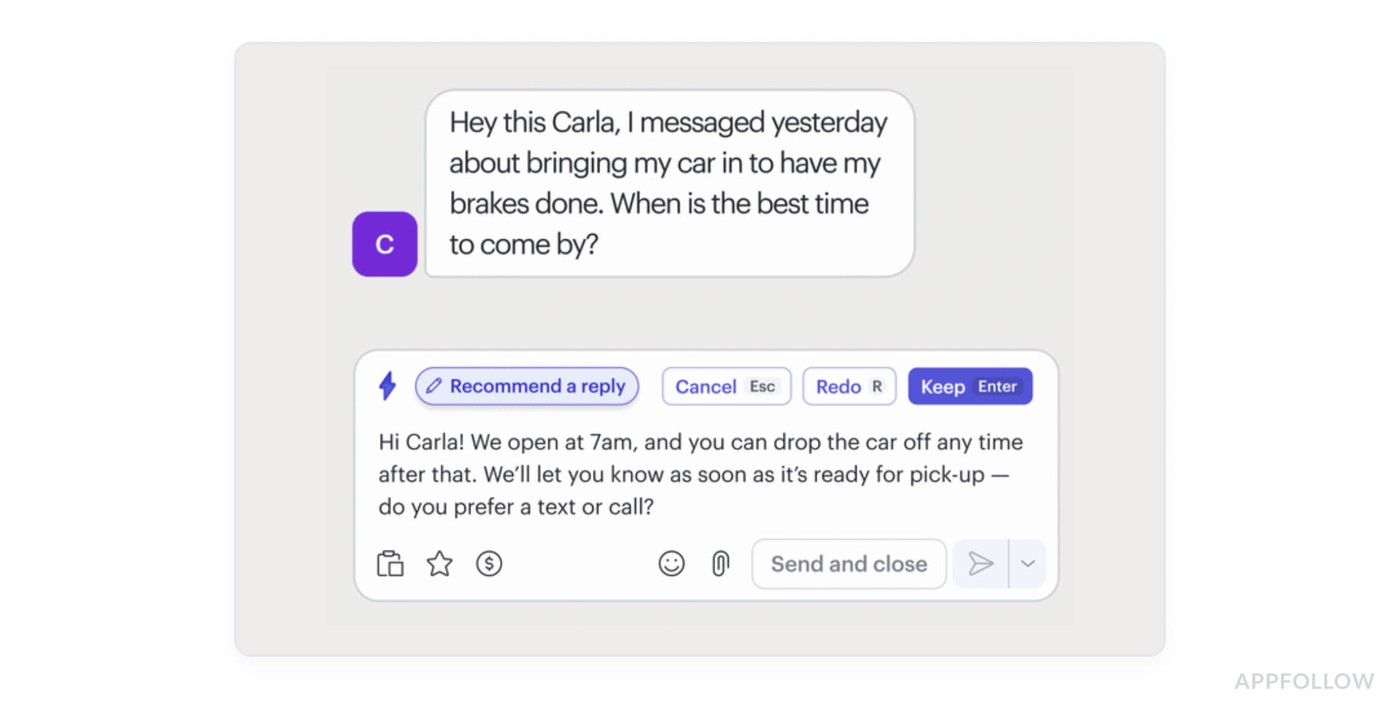
Podium automates app review management and customer communication. Its AI handles review collection, responses, and feedback tracking to build reputation.
- Need reviews? It asks for them.
- Got feedback? It organizes and responds.
- All while you focus on building the next big thing.
Target users: App companies seeking more downloads and user satisfaction.
Key features
- AI generates personalized review requests to increase response rates
- Automated response system crafts customized review replies
- Single inbox combines social, review, and text messages
- Real-time feedback system catches issues early
- Analytics dashboard tracks review metrics and sentiment trends
Pricing
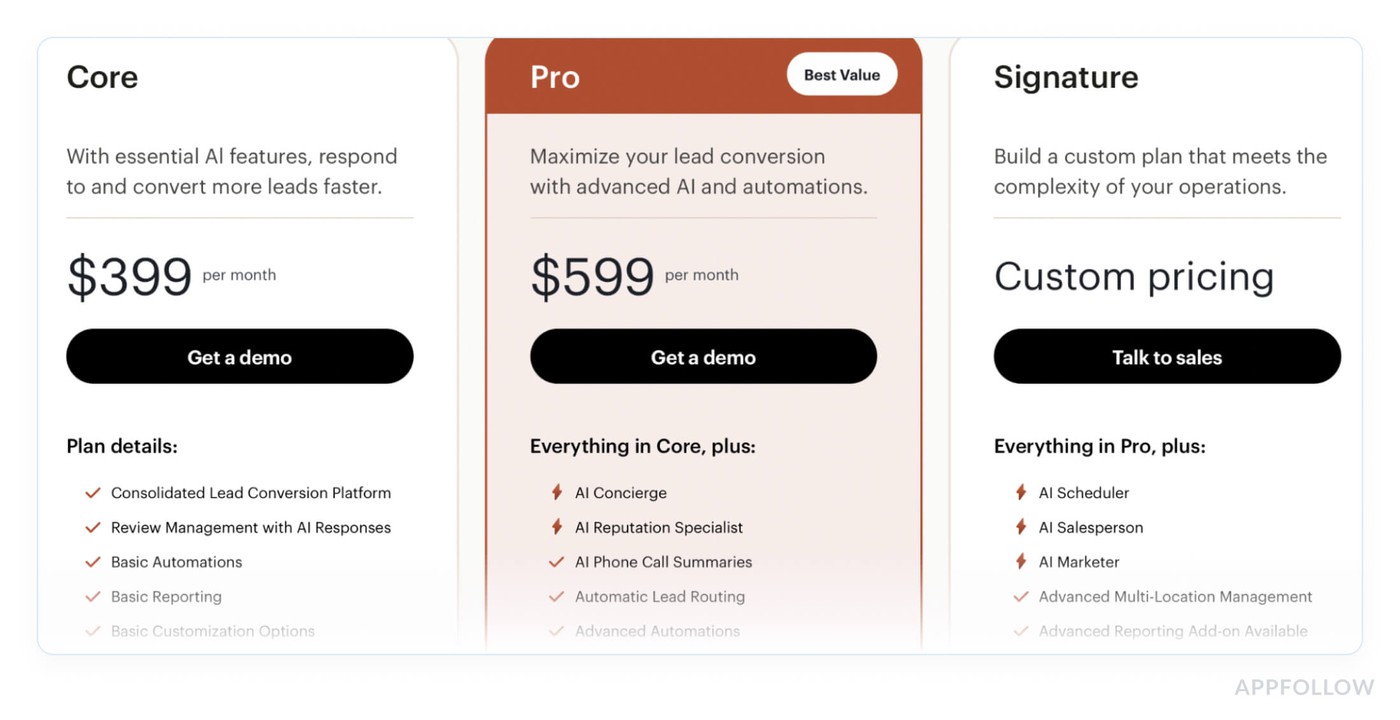
While details depend on your plan, there’s good news: Podium offers a 14-day free trial. That’s two weeks of trying out every feature, risk-free. Whether you’re just starting or ready to scale, this review management software has a plan to match.
Brand24
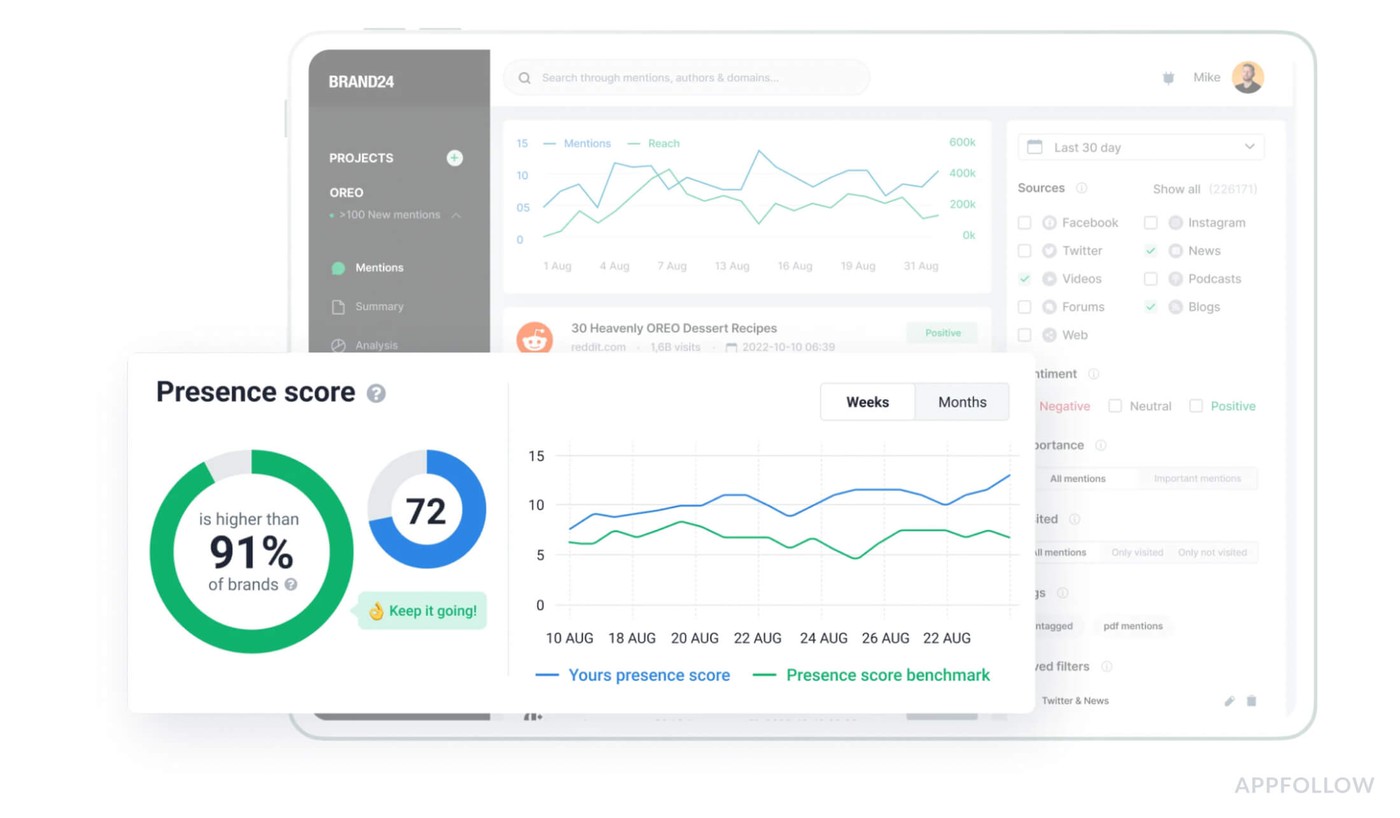
Trying to keep up with what users are saying about your app everywhere? Let me put you on to Brand24. It’s one of the smartest online reputation platforms I’ve worked with — like a 24/7 radar scanning the entire internet for any mention of your app’s brand.
Big names like Intel, Uber, and Stanford University use it to stay on top of social media, online reviews, blog posts, forums, and news. For us app marketers and devs, it’s a game-changer for monitoring user sentiment, feature complaints, bug frustrations, and even fan love across all major app platforms.
Brand24 integrates with Twitter, Instagram, Facebook, YouTube, TikTok, Reddit, news sites, and more. You can track content in real time and reply or escalate quickly before minor issues become rating-killers.
Key features
Here’s why it’s one of the best reputation management tools:
- Real-time mention tracking from dozens of media sources
- AI-powered sentiment analysis for spotting negative trends early
- Custom alerts for keyword spikes (like “crashing,” “slow,” or “update broke”)
- Discussion volume charts to catch review bombs
- Competitor brand monitoring side-by-side
- Shareable reports for team sync
It’s perfect for review drops after a bad release, influencer mentions, or unexpected bugs showing up in forums. While it’s not a typical review management app, it fills a huge gap in reputation management online tools by tracking everything around your app’s presence.
They even have reputation management free tools to try it out — just enough to get hooked.
Pricing
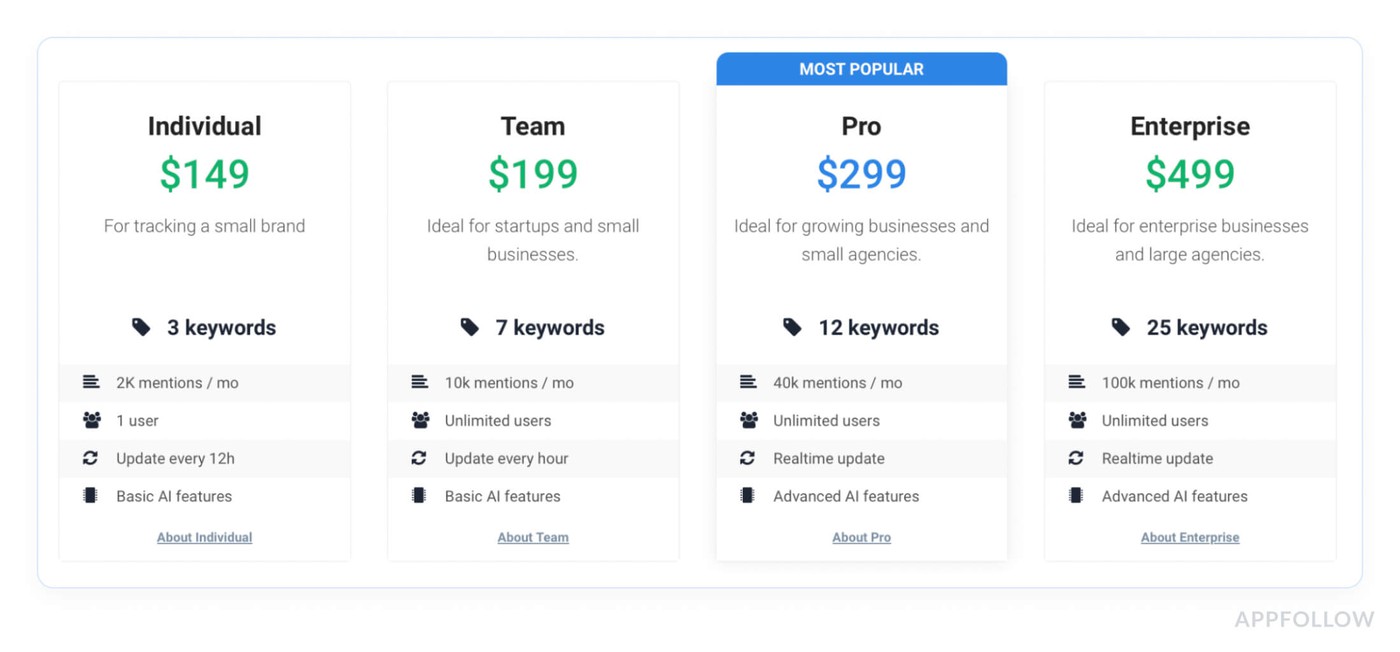
Brand24 starts at around $149/month. It’s an online reputation management system with pricing based on the number of mentions, keywords, and users. Smaller teams can start with the Individual plan.
Larger businesses usually go for more advanced reputation management solutions with full team access and deeper insights. It’s perfect if you need to track your app’s reputation across channels in real time.
They also offer free reputation monitoring tools during the 14-day trial.
Qualtrics

If you’re looking for a reputation management tool that’s more data wizard than basic dashboard, Qualtrics may be your choice. This one’s all about deep insights, like, not just what users are saying, but why they’re saying it. It pulls in reviews, social mentions, survey data - you name it - and helps you act on it. We’re talking sentiment analysis, experience gaps, churn signals, the whole nine.
And the best part? You’re not locked into a one-size-fits-nobody pricing plan. They’re super flexible. Plus, this is one of the best review software for small businesses because you get a 30-day free trial to test-drive everything with zero pressure.
Honestly, if your app’s ready to level up from “just monitoring” to actually shaping your reputation and user experience, Qualtrics is a total power move. It’s like hiring a user empathy coach for your product team — but smarter, faster, and way less emotional.
Rep management software features
- Digital journey analytics identify and resolve friction points
- Journey mapping visualizes and improves user interaction paths
- AI converts user data into strategic recommendations
- Real-time feedback system enables quick issue resolution
Pricing
Qualtrics reputation management tool pricing is flexible like yoga-teacher-on-retreat.
And the best part? You get a whole 30-day free trial to snoop around, push all the buttons, and see if it vibes with your team, no awkward sales calls, no commitment ring.
If you’re ready to glow up your app’s store presence and make your users feel seen, this might just be the reputation management tool your app’s been manifesting.
#Reputation.com
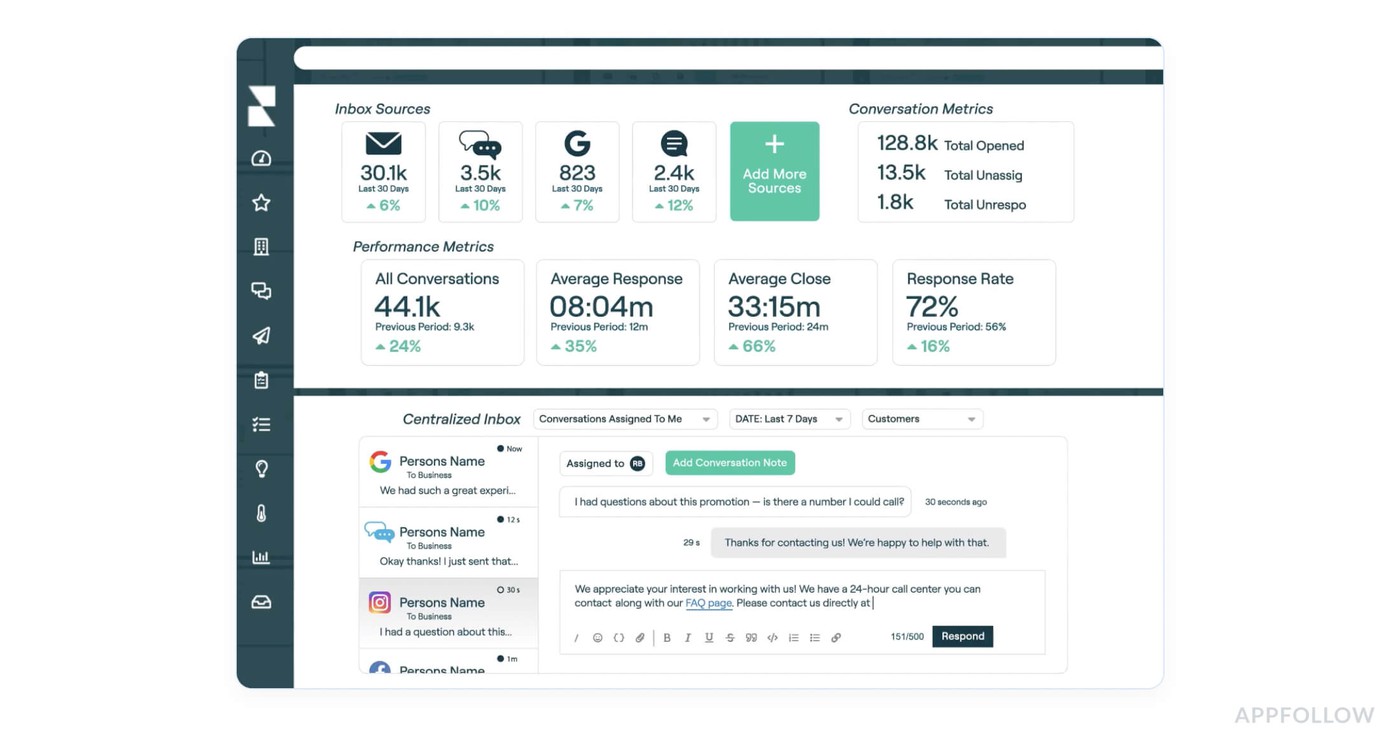
Yes, it’s the same online reputation management solution that brands like GM and Ford use, but don’t let the big-name energy intimidate you. It’s super useful for app teams like ours.
It pulls all your juicy review tea, app ratings, social mentions, even Reddit rants into one dashboard. You get a real-time, birds-eye view of your app’s vibe everywhere. One-star meltdown? You’ll know. Praise for your latest update? Boom, there it is.
As a reputation management software, it’s honestly a goldmine for app marketers and devs. You can track trends, catch sentiment shifts, and respond at scale without dropping the ball on user experience.
Its best features
- Cross-platform review roundup
- Smart alerts and approval flows
- Pain-point analysis with keywords
- Competitor benchmarking
- Integrations with Google, Facebook, Twitter — the whole crew
It’s like your app’s command center, but make it strategic.
The edge? Unlike most free reputation management tools, Reputation.com goes beyond surface-level tracking. It connects insights to real actions so you’re not just watching.
If you want the best online reputation management software that helps grow your brand and keep your online presence strong, this is the one.
Pricing
It starts at around $99/month, which is pretty sweet considering it’s one of the best online reputation management tools out there.
You’re getting a full command center to watch your app’s rep across reviews, media coverage, and social buzz. Pricing scales depending on how many users, features, or locations you’re juggling. Small team? This reputation management platform's basic plan totally does the job. Bigger brand? You’ll love the extras like content scheduling and deep-dive analytics.
And yes, they offer a 14-day free trial so you can test it out without committing harder than a second date.
Statusbrew
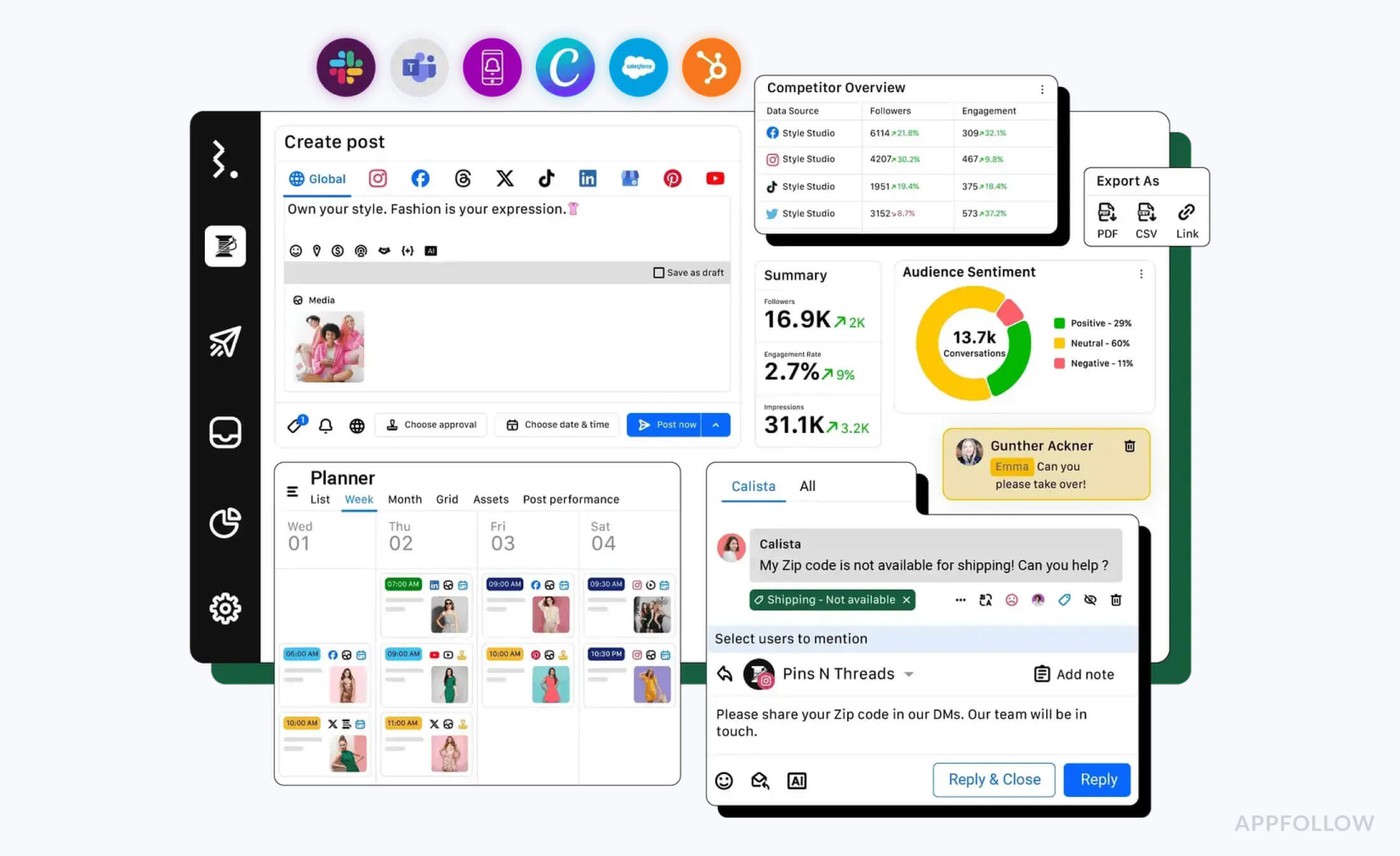
Statusbrew is your app’s rep management dream team packed into one sleek dashboard. Whether it’s app reviews, social mentions, or user feedback, review management platform pulls everything together so you’re not jumping across platforms like a maniac.
As a reputation management tool Statusbrew gives you a real-time view of what people are saying and the power to do something about it.
Features
- Reviews from Google, App Store & more in one place
- A unified inbox so no comment, DM, or tag slips by
- AI sentiment analysis to catch bad vibes early
- Automation for tagging, moderation, and other time-sucks
- Analytics that show what’s working (and what’s not)
Pricing
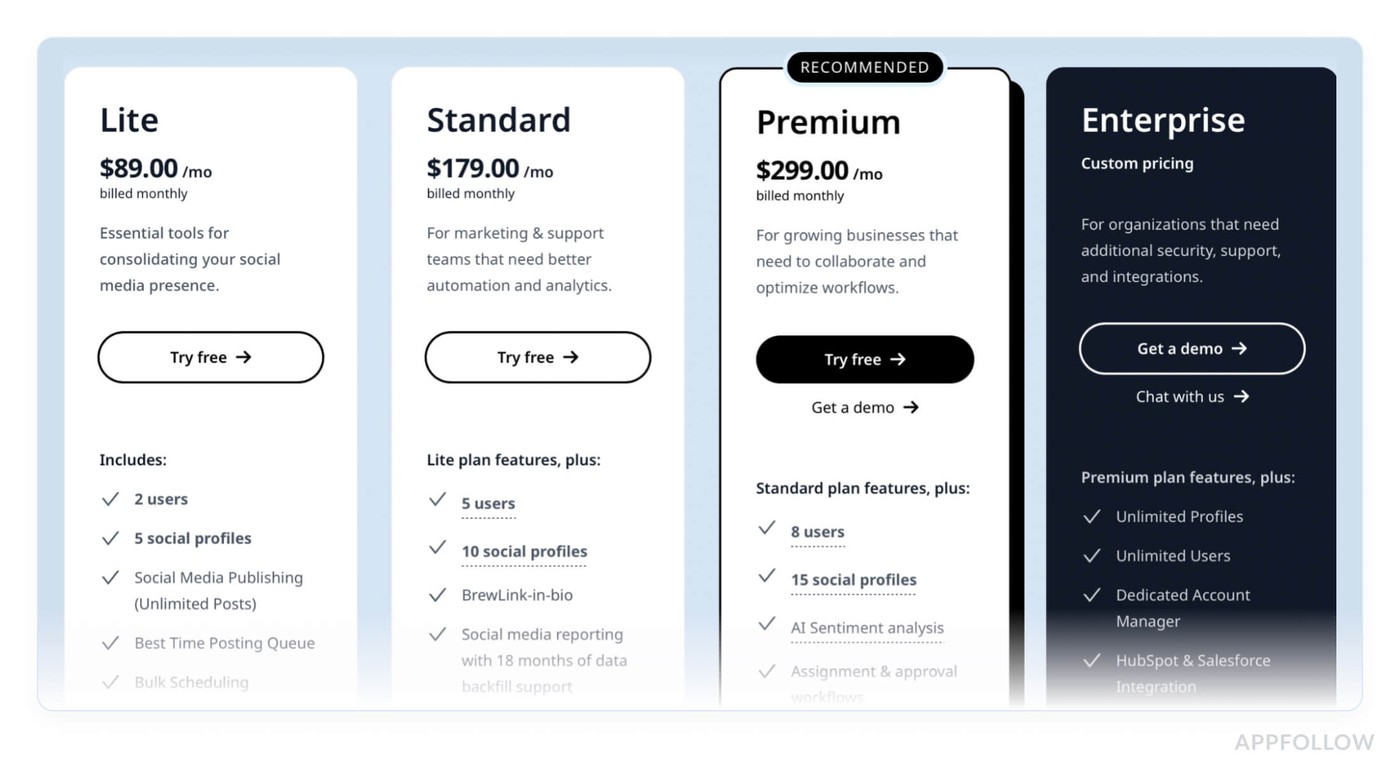
Start with the Standard Plan at $179/month for solid basics. Need more firepower? The Premium Plan at $299/month adds advanced workflows and team collab tools. Got a big operation? Their Enterprise reputation management program is fully customizable.
Reputation management software comparison: best tools by use case
The best reputation management software depends on where your reviews live and how your team works with them.
App teams need App Store and Google Play workflows. Local brands need location-level review routing. Social teams need listening, comments, mentions, and brand monitoring. Enterprise teams usually need reporting, permissions, integrations, and enough structure to keep customer feedback from turning into a messy spreadsheet.
Here’s the clean shortlist.
Fifteen platforms, priced from vendor pricing pages in August 2026. Read the billing model column before the price column, because a $60 per-location tool costs more than a $199 flat tool the moment you pass four sites.
| Tool | Entry price | Trial | Best for |
|---|---|---|---|
| AppFollow | $29/mo | 10 days | App teams handling store reviews at scale |
| AppReviewBot | $19/mo | 14 days | Cheapest way to get store reviews into Slack |
| Reviewflowz | $45/location/mo | Yes, length unpublished | Teams watching software review sites and stores together |
| Appbot | $59/mo ($49 annual) | 14 days | Sentiment analysis and reporting upward |
| GatherUp (was Reputology) | $99/mo (1 location) or $60/location/mo | 14 days | Multi-location local brands |
| App Radar | €69/mo (€58 annual) | 7 days | Reviews inside an ASO workflow |
| Reputation.com | $80/location/mo | Not offered | Large multi-location programmes |
| Determ | €99/mo | 5 days, 14 after a demo | PR and comms teams |
| Brand24 | $249/mo ($199 annual) | 14 days | Mention tracking with a real budget |
| Sprout Social | $199/seat/mofor review management | 30 days | Reviews inside a social workflow |
| YouScan | $499/mo | Not published | Visual social listening |
| Birdeye | Not published | Not offered | Multi-location local brands |
| Podium | Not published | Not offered | SMB review requests over SMS |
| Brandwatch | Not published | Not offered | Enterprise consumer intelligence |
| ReviewTrackers | Not published | Yes, via signup | Brands with locations and an app |
cta_get_started_yellow
How to choose the best reputation management software for your team
Feature lists all look the same at this point, so skip them and answer six questions instead. Each one eliminates roughly a third of the market.
Worth saying before the questions: most roundups of the best online reputation management tools rank by feature count, and feature count is close to meaningless here. A platform with forty features covering the wrong review sources is worth less to you than a $19 alerting tool pointed at the right ones. So the questions below start with sources and end with money, in that order.
- Where do your reviews actually arrive? Pull last quarter's volume by source. If 80% comes from the app stores, everything in the local column above is off your list, whatever the sales deck says.
- How far back does the import go? Ask for the number, not a yes. Ninety days is common on entry tiers and useless for spotting a slow rating decline. Anything under twelve months makes year-over-year comparison impossible.
- Who replies, and in what voice? AI reply drafting is now standard and quality varies wildly. During a trial, generate ten drafts for one-star reviews and count how many you would send unedited. Under four means you have bought a text generator, not an assistant.
- What happens at the next tier? Sentiment analysis, competitor tracking, and API access get paywalled more often than anything else. Price the plan you will need in twelve months, not the one you need this week.
- Can it prove impact? A tool that shows review volume is a dashboard. A tool that connects a rating change to installs, conversion, or revenue is worth paying for. Very few clear this bar, so ask directly.
- Does it keep you legal? See the compliance section below. Some review-request features are a genuine liability now.
Two shortcuts if you would rather not run all six. Teams shopping for tools for online reputation management across many channels should start from question one and buy the platform matching their two largest sources. Anyone who already knows they need a single reputation management tool for one channel can skip to question four, because tier pricing will decide it anyway.
Review requests, review gating, and the FTC rule your software might break
Review-request automation is a headline feature on half these platforms. Some of it now carries real legal risk, and no vendor is going to open a demo with that.
The FTC's Consumer Review Rule was published in the Federal Register on 22 August 2024. Civil penalties run to $53,088 per violation, and the numbers stack per instance rather than per campaign. On 22 December 2025 the Commission sent ten warning letters to businesses over potential violations, which is the clearest signal yet that enforcement moved from theoretical to active.
What the rule targets:
- Fake reviews, whether written in-house, bought, or generated
- Incentives conditioned on sentiment, meaning a discount or entry offered only for a positive rating
- Testimonials from insiders presented as independent customer voices
Where the software question gets sharp is review gating: surveying customers first and routing only the happy ones to a public review page. Plenty of platforms shipped that as a feature. Google's own policy has prohibited it for years, and the FTC's direction of travel makes it an unwise thing to automate at scale.
Three things worth checking before you sign anything:
- Does the review-request flow branch based on a satisfaction score? If yes, ask the vendor directly how they justify it.
- Does the incentive language in their templates offer anything in exchange for a review, or only for leaving a review regardless of rating? The second is defensible, the first is not.
- Can you export your full review history? Suppression accusations are much easier to answer when you hold the record.
None of this is legal advice, and a lawyer should look at your specific flow. Knowing which questions to ask on the demo call is most of the value.
cta_get_started_purple
Reputation management software FAQs
What does reputation management software do? It collects reviews and mentions from across the web into one place, then helps you reply, tag, and report on them. Better platforms add sentiment analysis, alerting on rating drops, competitor tracking, and a way to connect reputation changes to business outcomes.
What is the best software for reputation management? No single winner exists, because the tools split by source. AppFollow leads for App Store and Google Play. Birdeye and Reputology lead for multi-location local brands. Brandwatch and YouScan lead for social listening. Match the tool to where your reviews arrive.
How much does reputation management software cost? Entry tools start near $19 a month for basic review alerts. Mid-market platforms run $50 to $150. Enterprise and multi-location tools quote custom pricing, often per location, which climbs quickly. Social listening platforms sit highest, with some starting around $499.
Is review gating illegal? Filtering customers by satisfaction and sending only happy ones to a public review page violates Google's policies and sits badly against the FTC Consumer Review Rule. Penalties reach $53,088 per violation. Ask any vendor selling gated review requests how they justify the practice.
What is the difference between reputation management and review management? Review management covers collecting and replying to reviews on stores and directories. Reputation management is broader, adding social mentions, news, forums, and search results. Most teams need review management first, then widen the net once replies are under control.
What is the main difference between SEO and ORM? SEO works to rank your own pages higher. Online reputation management works to control what appears about your brand across search results, reviews, and social, including pages you do not own. The two overlap when a negative result ranks for your brand name.
Can reputation management software integrate with other tools? Most connect to Slack, Microsoft Teams, Zendesk, Salesforce, and Jira, so reviews can become support tickets or bug reports. API access is common on higher tiers. Check whether the integration you need sits on the plan you are actually buying.
How do you measure the success of reputation management? Track average rating over time, reply rate, median time to reply, and share of reviews mentioning a given theme. Connect those to installs, conversion, or revenue where you can. Volume alone tells you nothing about whether the work is landing.
What is the best free reputation management software? Free tiers cover monitoring and rarely cover replying. Brand24, Determ, and AppFollow all offer limited free access to alerts or basic review views. Expect caps on sources, history, and users. Free works for one brand and one channel, not for a team.
Read also
- Learn how to improve brand reputation from experts who've helped apps skyrocket to success.
- Your competition is stealing your customers while you ignore your online image. Learn reputation management for small businesses today.
- Without a solid online reputation management strategy, you're playing Russian roulette with your brand.
- Fix your customer service with reputation automation.
- Stay ahead of trends with app intelligence data.