ASO News 2026: App Store Optimization Trends, Algorithm Updates & What Changed This Quarter

Table of Content:
App Store Optimization, or ASO, used to feel relatively stable. Then the last 12 months happened. If you've been following ASO news, you've probably noticed the shift: app stores changed more in one year than they did across the previous five.
AI-driven search and recommendations now influence app discovery. Apple keeps adjusting ranking signals. Custom Product Pages moved from “nice extra” to a serious growth lever. Ratings increasingly shape organic visibility, and now LLM-based app discovery has entered the mix as well.
At AppFollow, we track over a million apps across the App Store and Google Play, which means patterns show up fast. This guide pulls the noise into one view:
- the latest app store optimization news,
- the app store optimization trends worth paying attention to,
- and a practical checklist for what ASO managers, mobile growth teams, product leaders, and indie publishers should do this quarter.
Because effective app store optimization now shapes how users find apps and how mobile growth happens.
Key takeaways
- AI search and LLM-based app discovery is the biggest ASO trend of 2026.
- Apple Search algorithm now weights rating recency more aggressively.
- Custom product pages are the new A/B testing primitive.
- Localization is no longer optional. It's a top-3 ranking factor in 2026.
- Reviews and review sentiment now feed both ranking and conversion.
I’d treat this quarter as a systems update. Discovery signals got wider, user feedback carries more weight, and small ranking shifts now move organic growth faster than many teams expect.
TL;DR on what's changed in App Store Optimization in 2026
If you've been following app store optimization trends for a while, 2026 probably feels less like a routine algorithm update and more like a platform reset. Discovery changed, ranking signals shifted, and AI entered the journey. Here are the biggest changes shaping growth this year:
- AI search became a new app discovery layer. Users increasingly ask ChatGPT, Gemini, Perplexity, and Apple Intelligence which app to install before they open an app store. ASO teams now optimize for both store search and AI-generated recommendations.
- Apple algorithms reward freshness and trust signals more aggressively. Rating recency, metadata freshness, in-app event visibility, and suspicious review activity increasingly influence rankings.
- Custom Product Pages turned creative testing into a standard workflow. Apple allows up to 35 variants per app, while Google Play Store Listing Experiments continue pushing A/B testing from optional to expected.
- Localization became one of the strongest growth levers. Multi-language optimization increasingly affects rankings and conversion, while localized pages regularly outperform simple translated listings.
- Reviews now influence both ranking and conversion. Reply rates, sentiment trends, and review recency shape visibility while also affecting whether users install.
- Apple Search Ads and organic ASO started sharing the same data loop. Paid keyword behavior increasingly reveals organic opportunities, and stronger rankings often improve acquisition efficiency.
- ASO now works as a connected system. Keywords, reviews, screenshots, paid acquisition, and AI discovery increasingly affect one another rather than operating as isolated workflows.
App store optimization news: the updates ASO teams need to track
App store optimization news moves fast because small platform updates often create ranking effects that show up weeks later.
Apple App Store updates this quarter
Apple rarely announces ASO changes directly. I’ve learned to watch smaller product shifts because that is usually where the real movement starts.
- Custom Product Page reporting continues getting deeper. Attribution and audience-level reporting increasingly connect creative decisions with acquisition outcomes, so creative tests can now be judged on installs and retention.
- Apple Search Ads and organic ASO now overlap more. Audience signals and keyword performance increasingly influence one another, paid bid data is the cheapest organic keyword research you’ll do this quarter, and organic ranking quietly lowers Search Ads CPT.
- Recommendation systems appear more behavior-driven. Discovery surfaces increasingly respond to context and engagement signals, not metadata alone, meaning post-install behavior (D1/D7 retention, session frequency, in-app events) now feeds visibility.
- Privacy and transparency signals keep expanding. Store trust increasingly affects conversion performance, under-disclosing data use or shipping vague privacy labels measurably hurts your install rate, even for users who don’t read the label.
- In-app events continue gaining visibility. Better categorization and execution increasingly influence discovery opportunities, well-tagged events surface in Today tab, search and personalized recommendations, giving publishers a recurring re-engagement and reacquisition channel.
BANNER
Google Play Store updates this quarter
Google usually updates infrastructure first. Teams feel the impact later.
- Store Listing Experiments continue getting more central to optimization workflows. Screenshot and creative decisions increasingly belong inside structured testing cycles instead of one-time launch choices. Google keeps expanding experimentation capabilities around store assets and conversion measurement, A/B is now the default operating mode, not the exception.
- Play Integrity protections continue expanding. Verification and anti-abuse signals increasingly help Google distinguish trusted apps from risky behavior. Security signals now influence more than fraud prevention alone, they bleed into discoverability and trust scoring, so review-bombing campaigns and fake-install vendors burn the ranking faster than they used to.
- Android version requirements continue moving forward. Older support thresholds regularly phase out as platform requirements evolve. Release planning increasingly affects eligibility, reach, and visibility; apps that miss the annual target-SDK bump quietly disappear from new-device search results well before they’re formally delisted.
- Pre-registration continues to become more sophisticated. Teams have more launch planning controls and stronger ways to build momentum before release day. Pre-launch strategy increasingly starts well before an app appears publicly; early reward tiers, milestone rewards, and pre-registration creatives now have a meaningful impact on D1 install velocity, which feeds initial ranking.
- Play Points keeps expanding visibility across experiences and categories. Reward mechanics increasingly overlap with merchandising and retention systems. Loyalty signals now surface more directly in parts of the Google ecosystem, opting in (and tuning your reward configuration) is starting to look less like a finance decision and more like an ASO decision.
Read also: App Store Optimization for Games - The 2026 Playbook for Indie Devs and Publishers
Other store ecosystems worth watching
The four stores below don’t make the headline rotation often, but each one moved meaningfully in 2026 and is now harder to ignore. Most teams add them too late, after a competitor is already ranking #1 there with the exact same APK. Here’s what changed this year, why it matters for ASO, and the signal that says it’s time to ship.
Galaxy Store
What changed in 2026. On May 28, Samsung shipped staged-rollout support through the Content Publish API in Seller Portal, so you can release a new build to a percentage of Galaxy users and ramp it programmatically instead of pushing 100% on day one.
For ASO and release teams this closes the gap with Play Console’s staged rollouts and makes Galaxy Store viable as a first canary channel rather than a last one.
Earlier in the year, Samsung’s January Stranger Things tie-in with Netflix pushed an exclusive theme through Galaxy Store in 186 countries, unlocked only by downloading and launching the Netflix app.
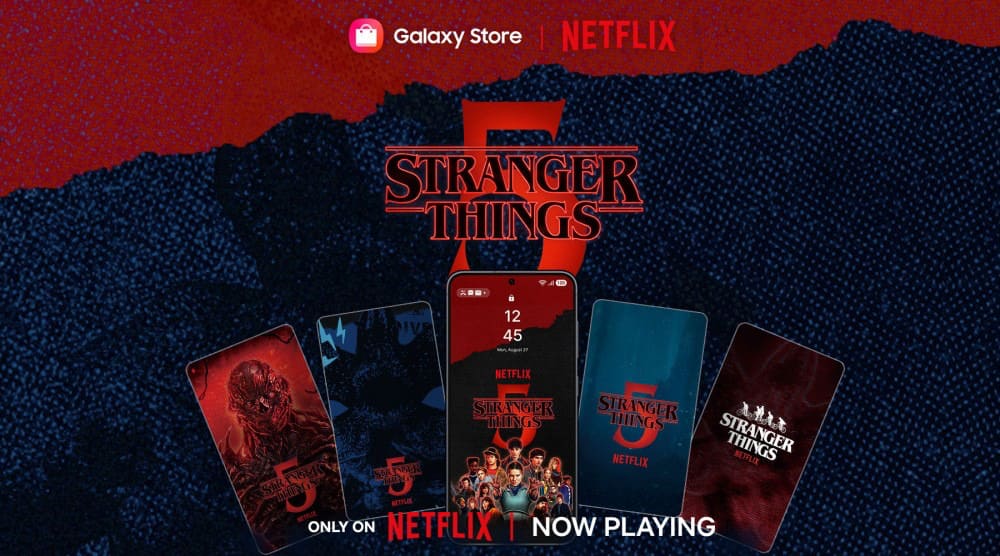
The mechanic is worth studying: Samsung continues to use Galaxy Store as a paid-install lever for partner apps tied to themes, wallpapers and watch faces — a featuring path that has no equivalent on Play.
Why it matters. Title and short description are localized separately from Google Play, so you can re-test creative without burning your Play listing — now with the safety net of a percentage rollout if a bad build slips through.
Ship when: ≥10% of your installs are on Samsung devices, or you’re seeing high uninstall churn on low-end Android.
Read also: App Store Optimization Title: The 2026 Playbook for iOS & Google Play
HUAWEI AppGallery
What changed in 2026. Huawei is openly scaling HarmonyOS 6, with its CEO publicly committing to crossing 100M devices in 2026. Fresh share data shows HarmonyOS overtaking iOS in China again in May , so the addressable AppGallery audience for HarmonyOS-native (“Meta-Service”) apps is no longer a rounding error. Source: Huawei Central
The signal Western teams shouldn’t miss: Tesla shipped a HarmonyOS-native AppGallery build to stable on April 7 — not an Android port. A flagship US brand committing to a HarmonyOS-only build is a competitive marker, not a curiosity.
Why it matters. If your app uses Google Mobile Services (Maps, FCM push, Google sign-in), it won’t run out of the box. You need an HMS Core build or a graceful fallback. Push delivery on Huawei devices remains the quietest cause of broken retention dashboards for teams that don’t track it.
Ship when: you have any meaningful CIS, MENA, or Greater China DAU, or push-notification delivery rates on Huawei devices look broken in your analytics.
Microsoft Store
What changed in 2026. On May 7, Microsoft dropped the $99 company registration fee, added Microsoft Entra ID sign-up for work accounts, and rebuilt onboarding — individual and company accounts are now both free. The publish-side friction that kept smaller teams off the Store is gone.
At Build 2026 on June 2, Microsoft followed up with near-real-time analytics, subscription-specific insights and a faster app-certification path. For ASO and conversion measurement on the Store this is the biggest data-side upgrade in years — listing experiments no longer wait overnight to read.
Why it matters. Microsoft Store is quietly relevant again thanks to Windows 11, Copilot+ PCs, and stronger support for desktop apps and PWAs. Non-gaming apps can still use their own commerce platform and keep 100% of revenue.
Ship when: you sell to knowledge workers, have a Mac or iPad app already, or your web app has a usable installable PWA build.
Mac App Store
What changed in 2026. Apple’s biggest analytics overhaul since launch landed March 25: App Store Connect Analytics added 100+ new metrics, cohort analysis, two new peer benchmarks (download-to-paid conversion and proceeds per download) and an Analytics Reports API.
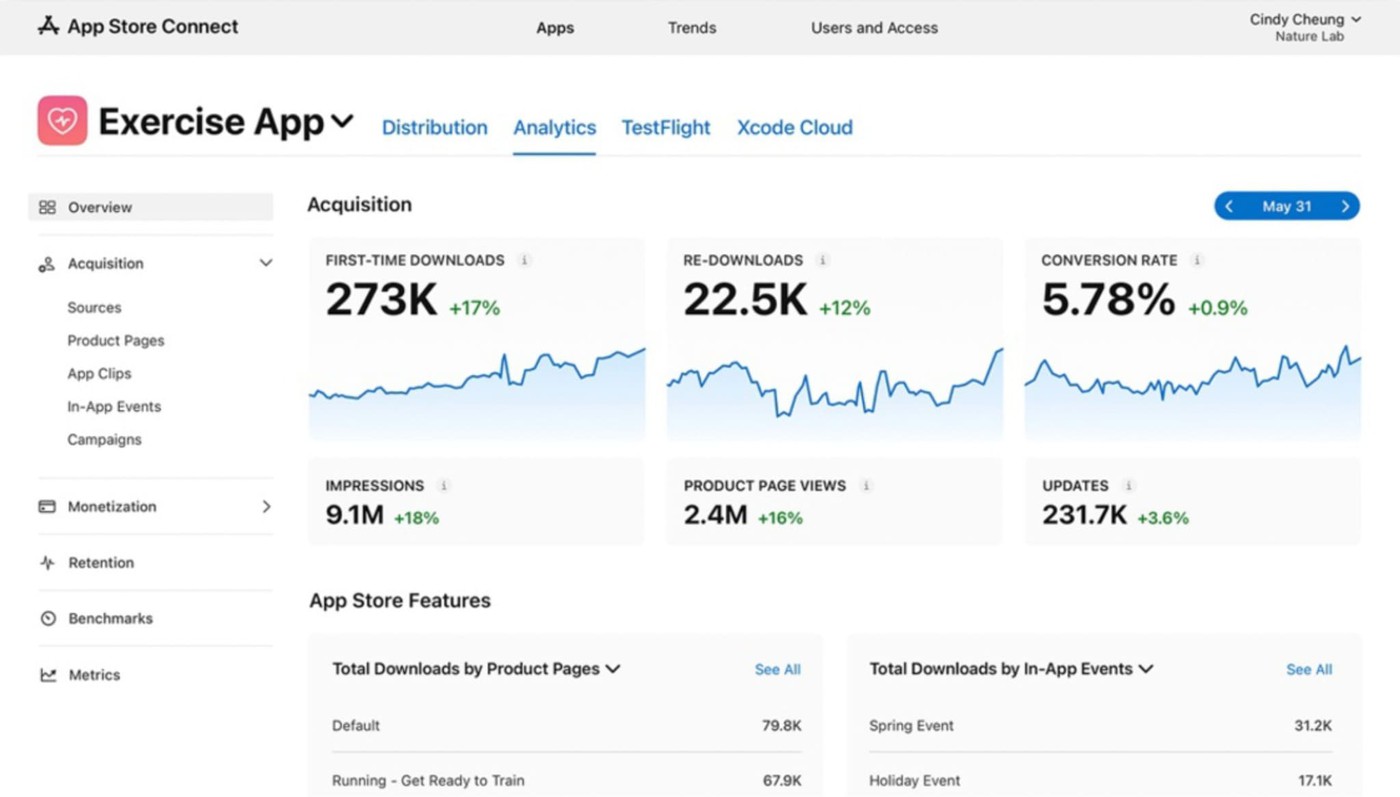
Mac App Store data is included — your macOS funnel is finally legible at the same depth as iOS.
Less talked about but more material to the China P&L: effective March 15, Apple cut the standard China-storefront commission from 30% to 25%, with eligible Small Business and year-two subscription apps moving from 15% to 12%.
That covers the Mac App Store China storefront too.
And as of today (June 8), WWDC26 unveiled macOS 27 and a new generative Siri layer, with the caveat that the EU rollout is delayed under Digital Markets Act constraints. Feature-availability gaps between EU and non-EU storefronts are now a real ASO consideration for any creative that promises an AI feature.
Why it matters. The store rewards apps that feel native on macOS: proper window behavior, keyboard support, menus, Continuity flows, UI that belongs on a laptop. With Mac Catalyst, an iPad codebase is the cheapest path in.
Ship when: your iOS app has any “I wish this worked on my Mac” review pattern. It almost always does.
Read also: ASO Screenshots in 2026 - Best Practices, Specs & App Store Optimization Images That Convert
Industry & policy news
In 2026, a store policy change can quietly rewrite your acquisition model before your next ASO sprint even starts. One fee update changes payback. One link-out rule changes checkout behavior. One kids-policy review turns a normal release into a rejected build. One alternative marketplace gives your competitor a cheaper install path in a market where you still think App Store + Google Play is “coverage.”
That’s the part app teams miss.
Regulation doesn’t usually hit your dashboard as one dramatic cliff. It shows up as a weird CAC wobble. A lower trial-to-paid rate in one region. A gap between MMP installs and store-console installs. A subscription margin that looked fine six months ago and now looks… suspicious.
So don’t read policy like a lawyer.
Read it like a growth team.
1. EU DMA: distribution is no longer a two-store conversation
The EU Digital Markets Act changed the iOS distribution conversation from “App Store or nothing” to “App Store, alternative marketplaces, web distribution, external payments, or some very careful mix of all four.”
Apple now allows EU iOS apps to use alternative distribution routes and alternative payment options under specific business terms.
That sounds like freedom. And it is, for some apps. But it is not automatically cheaper. Apple’s EU terms include reduced commissions, payment-processing choices, Store Services tiers, and technology fees that can change the math fast once installs or revenue scale. Source: developer.apple.com
The ASO impact is simple: your App Store listing may no longer be the only place where demand converts.
If you’re a subscription app with high LTV, alternative distribution or external payment tests may be worth modeling. If you’re a free app with low ARPU and huge install volume, the same move can punish you.
Do this: build one EU-only model before you test anything outside the App Store.
Track:
What to model | Why it matters |
EU installs by country | Not every EU market behaves the same |
ARPU and LTV by country | Fee savings mean nothing if checkout conversion drops |
First annual installs | Apple’s CTF/CTC logic can change scale economics |
Paid vs. free user mix | Free apps and paid apps feel the fee structure differently |
Store vs. web checkout conversion | Lower fees can still lose money if fewer users complete purchase |
The question is not “Can we bypass the store fee?” The better question is: At what LTV does another distribution route beat the App Store after fees, checkout drop-off, refunds, support, and attribution noise?
2. Third-party stores: your attribution will get messier before it gets smarter
On Android, third-party stores and direct APK installs have always been part of the ecosystem.
On iOS, the EU made that conversation real.
Here’s the ASO problem nobody wants to put in the slide deck: once installs happen outside the official store flow, your clean store-console picture starts breaking.
App Store Connect won’t tell the full story. Play Console won’t capture every off-store journey. Your MMP may need new source parameters, new postback logic, and cleaner naming conventions. Otherwise, you’ll look at your acquisition report and think one channel got worse when the install path changed.
Do this: treat every new store or marketplace like a new paid channel.
Before launch, define:
- source name
- campaign naming rules
- install event mapping
- trial-start mapping
- purchase event mapping
- refund/cancel logic
- country-level reporting
- store listing version
Not glamorous, but necessary. Because “we launched in another store” is not a strategy. “We can compare CAC, activation, D7 retention, trial-to-paid, and refund rate by store” is.
3. Store fee changes: the “30% app tax” line is too lazy now
The old shortcut was easy. Apple takes 30%. Google takes 30%. Done. That shortcut is now stale for a lot of apps.
Apple’s Small Business Program offers a 15% commission for eligible developers under $1M in annual proceeds, and Google Play’s service fee table includes 15% for the first $1M in annual developer revenue plus 15% for subscriptions.
Add regional billing programs, external payment rules, EU-specific Apple terms, Google’s external offers program in the EEA, and US external content links, and suddenly your “store fee” is not one number.
It is a blended rate. And blended rates are where bad LTV models go to die.
Do this: rebuild LTV with fee paths. A simple model should separate:
Segment | Fee logic to check |
iOS, non-EU, under $1M | Small Business eligibility |
iOS, EU | App Store IAP vs. external offer vs. alternative distribution |
Google Play, subscription | 15% subscription service fee |
Google Play, first $1M | 15% tier eligibility |
External checkout | Store fee + payment processing + conversion loss + support cost |
That last column matters. A lower platform fee does not automatically mean higher net revenue. If web checkout adds friction, breaks trust, or creates more failed payments, your margin “win” can disappear in the funnel.
4. Alternative payments: test by market, not by opinion
External checkout is one of those ideas that sounds obviously good in a finance meeting.
Then users meet the extra click.
Apple and Google both now have region-specific ways for some developers to send users toward external offers or alternative billing. Google’s EEA external offers program allows enrolled developers to lead users outside the app for offers, and its US external content links program allows links to external content, purchases, or downloads under specific requirements.
So yes, test it. But don’t roll it out globally because someone saw “lower fee” in a headline.
Do this: run checkout tests like a monetization experiment, not a policy reaction.
Measure:
- tap-to-checkout rate
- checkout completion rate
- payment failure rate
- refund rate
- support tickets per 1,000 purchases
- renewal rate
- net revenue after platform fees and payment processor fees
For subscription apps, watch renewals are harder than first purchases. A web checkout win on day one can still lose if cancellation, failed billing recovery, or account confusion gets worse later.
Read also: ASO Tips for 2026 - App Store Optimization Strategies, Techniques, and Checklist
5. Kids policies and age ratings: this is now a release-risk issue
If your app touches children, looks like it might be for children, or collects data from users who may be minors, policy is not a checkbox at the end of submission.
It is part of the product spec.
Apple’s Kids Category has strict requirements around links, purchases, privacy, analytics, and advertising, and Apple says once an app is approved for the Kids category, future updates must keep meeting those rules.
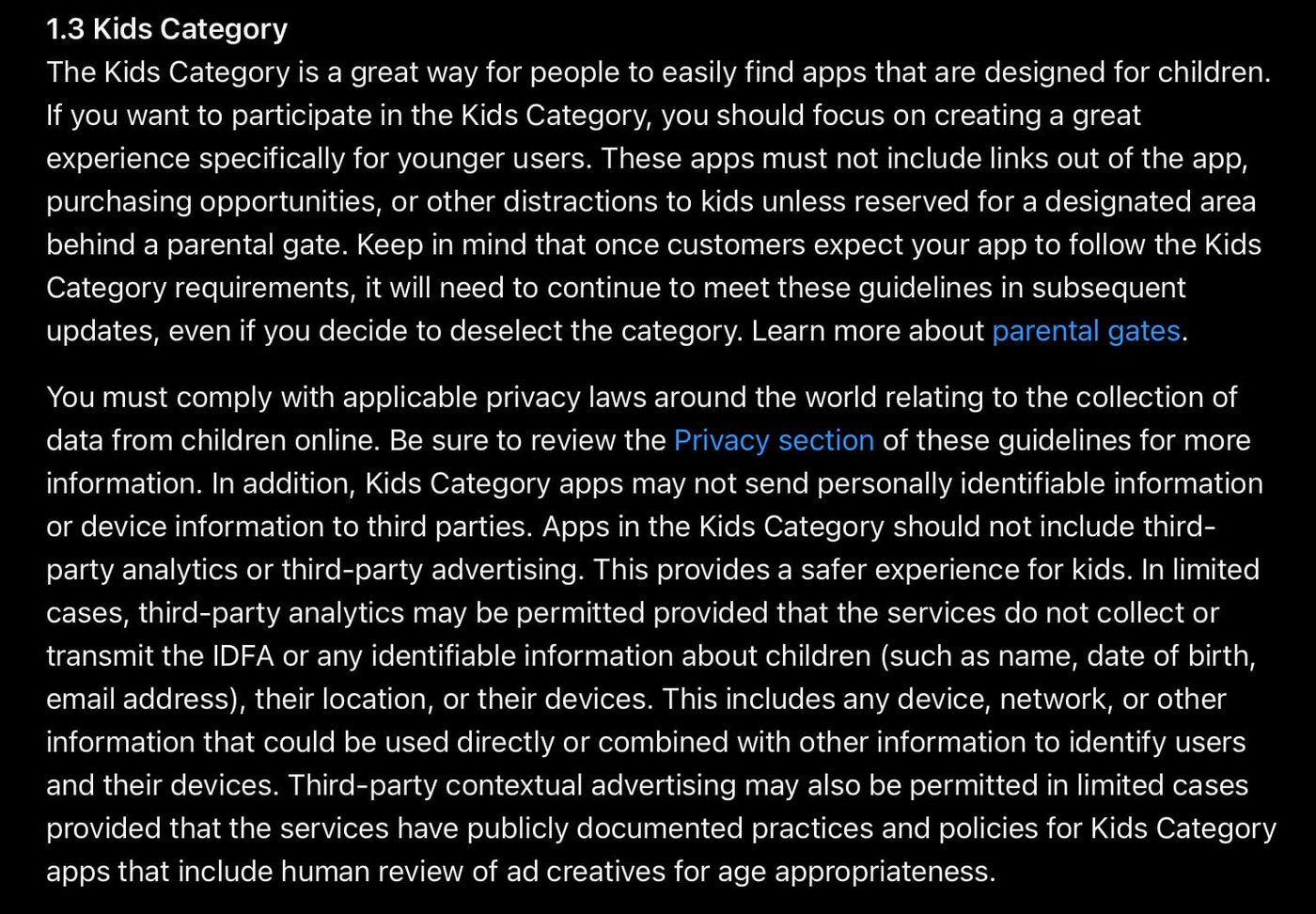
Google Play requires accurate target-audience declarations, Data Safety answers, IARC content rating responses, and child-data disclosures for apps that include children in their audience.
The ASO trap?
Your metadata can make you look child-directed even when your product team says, “No, no, it’s for everyone.”
Words like “for kids,” cartoon screenshots, child-like characters, classroom positioning, family imagery, and playful icon design can all change how reviewers interpret the app.
Do this: audit the listing before the build.
Check:
- title
- subtitle
- short description
- screenshots
- preview video
- category
- age rating
- privacy labels
- SDK list
- ad network behavior
- analytics collection
- UGC or chat features
A rejected listing hurts. A pulled listing hurts more.

6. AI, fake reviews, and metadata manipulation: “growth hack” is becoming policy risk
The stores are getting less patient with messy ASO.
Google Play explicitly bans misleading, excessive, irrelevant, or improperly formatted metadata, and it prohibits manipulating app placement through fake or incentivized ratings, reviews, or installs.
That matters because AI made bad ASO easier to scale.
Keyword-stuffed descriptions. Review replies that sound copied across 400 complaints. Fake review campaigns dressed up as “reputation growth.” Metadata refreshes written by a tool that has no idea what the app does.
Do this: keep a human editor in the loop for every metadata refresh.
Especially when you update:
- app title
- subtitle
- short description
- keyword field
- screenshots with claims
- review reply templates
- promo text
- “#1” or award-style messaging
- competitor comparison language
Use AI for clustering reviews, spotting keyword themes, summarizing user complaints, and finding localization gaps.
Don’t use it to mass-produce claims your product can’t defend.
What to do this quarter
Add a 10-minute policy check to your monthly ASO review. Not a legal meeting. Not a 37-tab compliance spreadsheet. Just this:
Ask this | Look at this |
Did a fee rule change in one of our top markets? | LTV, CAC payback, net revenue, refund rate |
Did a new distribution route become worth testing? | EU iOS share, Android off-store demand, competitor presence |
Did checkout rules change? | Store vs. web conversion, failed payments, renewal rate |
Did attribution get noisier? | MMP setup, source naming, install-event mapping |
Did our category or audience trigger stricter review? | Age rating, kids policy, privacy labels, SDKs |
Did our metadata start sounding risky? | AI-written copy, fake urgency, unsupported claims, review prompts |
Policy changes don’t usually kill growth in one day. They bend the numbers slowly. And the teams that catch the bend early are the ones that don’t spend six months wondering why CAC looks “weird.”
App store optimization trends driving growth in 2026
If you’ve been in ASO for a while, you can feel the shift. A few years ago, growth came from keyword placement and metadata tweaks. Today's app store optimization trends look different. Search systems got smarter, AI entered discovery, and reviews escaped the support queue. The biggest ASO trends now sit at the intersection of search, user feedback, and machine interpretation.
Trend 1: From keywords to intent: semantic ASO
Keyword stuffing has been losing value for years. Stores increasingly understand what users mean, not just what they type. Search behavior also changed. People search with natural phrases like “budget planner for couples” instead of isolated terms.
That changes the strategy. Think less about keyword lists and more about topic clusters. Related terms, intent patterns, and user language create stronger visibility signals.
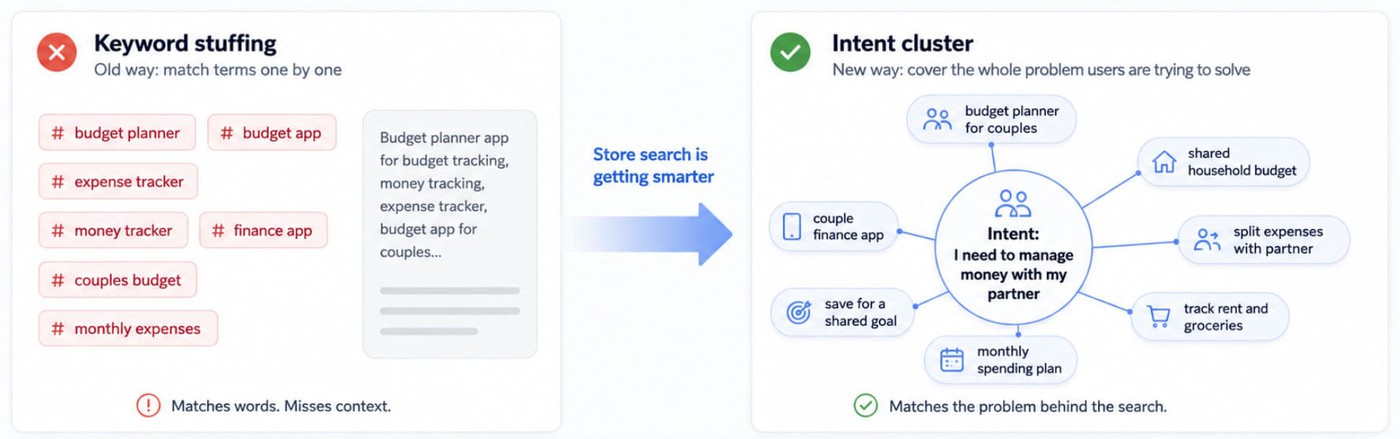
AppFollow’s Keywords Intelligence reflects that shift with visibility, popularity, difficulty, and AI-assisted suggestions designed around opportunity rather than guesswork.
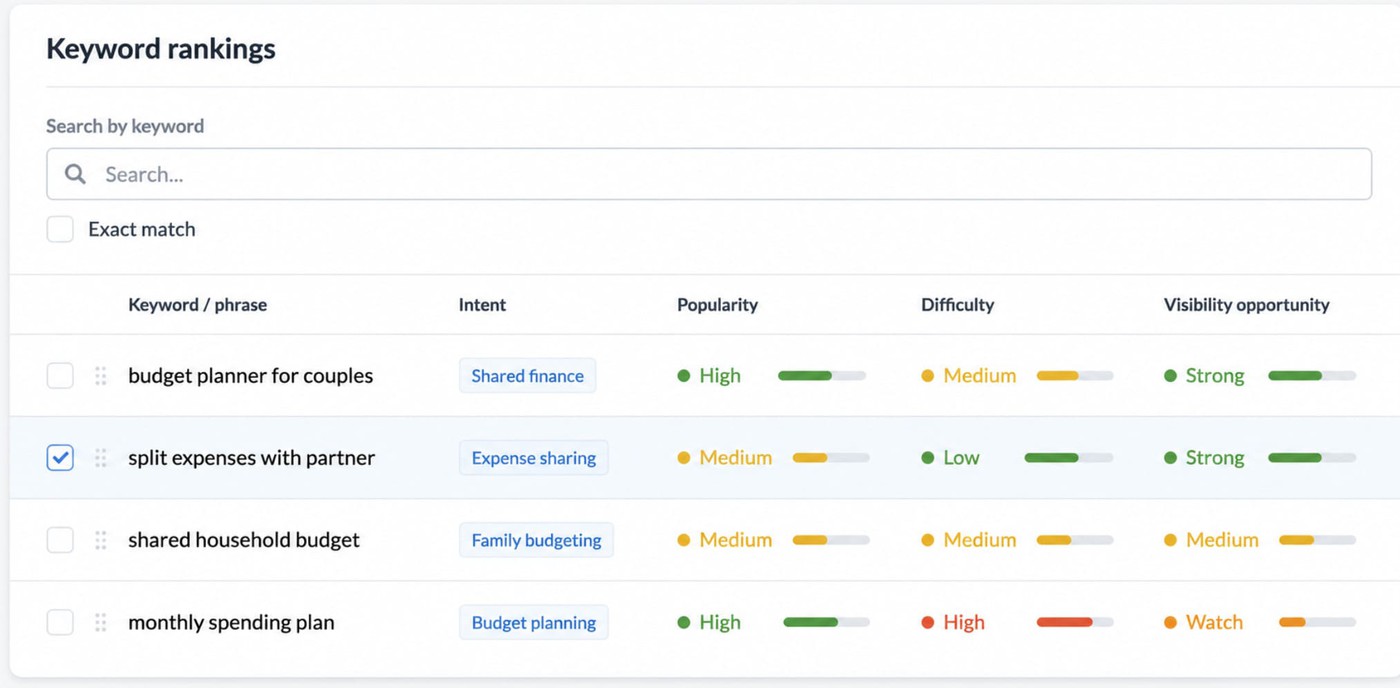
For a deeper breakdown, see this ASO keyword guide.
Trend 2: Sentiment becomes a marketing asset
App Store Optimization in 2026 is no longer about gaming a search box. Users are asking ChatGPT and Apple Intelligence which app to install before they ever open the store. The teams winning right now are the ones treating their store description, their reviews, and their website like a single source of truth that any model can quote, not three separate marketing assets.
— Anatoly Sharifulin, CEO & Co-founder, AppFollow
Reviews used to sit at the end of the funnel. A user installed the app, tried it, left a rating, and maybe the product team checked the damage after a release.
Now reviews sit much closer to the beginning of discovery.
They shape what future users believe before they install. They influence what AI summaries, store algorithms, comparison pages, and review widgets can pull from. And, very often, they contain the exact words your next screenshot headline should have used three months ago.
A review that says, “Finally, a budget app my partner uses” is positioning.
It tells you the user does not only want “budget tracking”, but shared finance without the relationship drama. So the next ASO move is testing a screenshot line like:
“Budget together without chasing your partner for updates.”
That is the shift.
Smart teams are turning sentiment into a marketing input.
Here’s what that looks like in practice:
What reviews say | What it really means | Where to use it |
“So much easier than the other apps I tried” | Ease is the conversion hook | Screenshot 1, short description, paid ad headline |
“I love that I can track everything with my partner” | Shared use is the core value | Subtitle, feature screenshot, keyword cluster |
“Notifications keep me consistent” | Retention feature has emotional pull | Onboarding, lifecycle emails, preview video |
“Too many steps to set up” | First-session friction is hurting activation | Product fix, onboarding copy, app description expectations |
“I switched from X because this is cleaner” | Competitor frustration is a positioning angle | Comparison page, paid creative, screenshot copy |
This is where sentiment analysis becomes useful for ASO.
Not as a pretty dashboard with green and red bars.
As a way to answer better marketing questions:
- What language do happy users repeat?
- What pain points show up before churn?
- Which features create emotional relief, not just functional value?
- Which competitor complaints can we turn into positioning?
- Which review themes deserve a screenshot, not just a reply?
AppFollow’s sentiment analysis tools helps spot those patterns across thousands of reviews, so you’re not manually reading review after review looking for a usable phrase. You can group feedback by topic, sentiment, app version, country, rating, and recurring complaint.
Trend 3: Generative AI for ASO copywriting
Generative AI is now the fastest way to get from blank page to usable ASO draft. It can cluster keyword ideas, turn review language into subtitle options, localize descriptions, and rough out screenshot copy before your second coffee. That matters when you’re managing 12 markets and three release cycles at once.
But AI copy is not a strategy. Store listings still need product truth, category nuance, and a human read on what users care about. I’d use AI to speed up research and draft variations, then have an ASO manager edit for intent, proof, tone, and compliance before anything goes live.
The teams that win won’t publish faster nonsense. They’ll test better human decisions faster.
Trend 4: Multi-store, multi-language as a default
Single-locale ASO increasingly feels like an old playbook. Growth teams launch globally earlier, expand faster, and support multiple storefronts almost from day one.
I still see teams treat localization as a phase-two project. Launch in English first, translate later, then think about regional optimization if growth appears. That approach breaks down faster now because discovery no longer happens market by market. App stores already understand language, geography, device context, and user behavior.
Someone can discover your app through search in one market, recommendation surfaces in another, and AI-driven suggestions somewhere else entirely.
Trend 5: Apple Intelligence and on-device app discovery
Apple Intelligence changes discovery logic because app suggestions increasingly appear through context instead of direct search. Users may reach an app recommendation before they ever decide to open the App Store.
Someone planning a trip, organizing a schedule, or searching for restaurant ideas could surface relevant apps through device-level recommendations tied to behavior and intent.
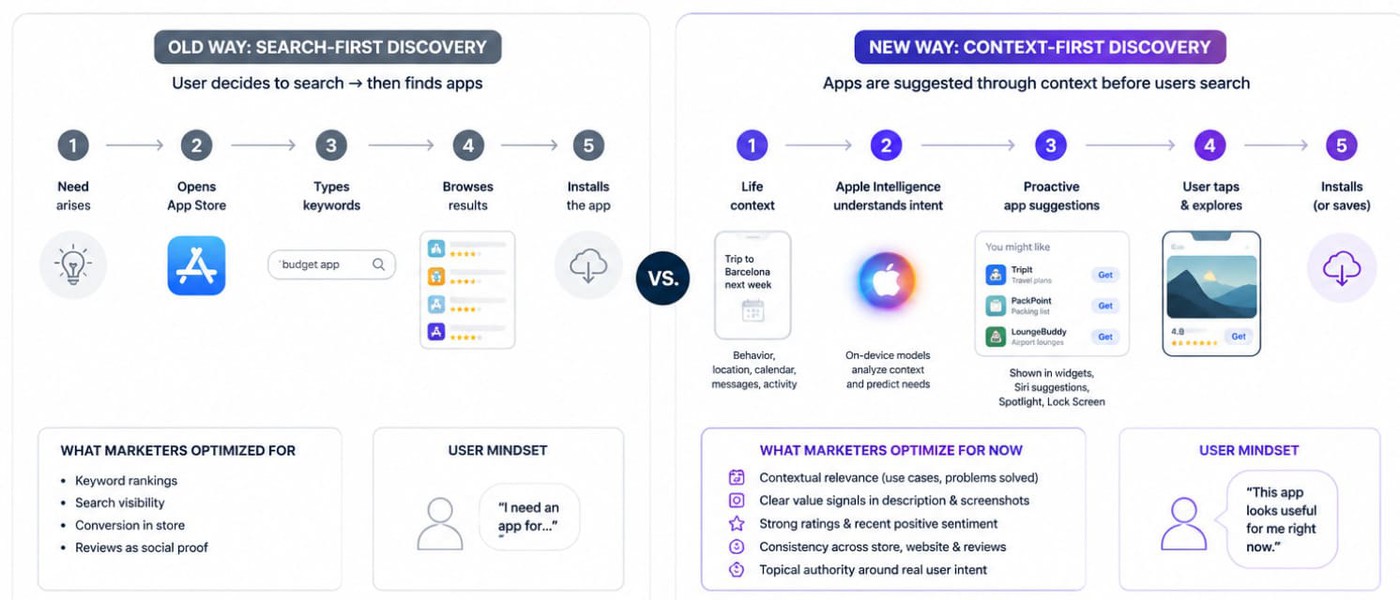
That shifts attention away from traditional keyword moments and toward contextual relevance.
I suspect many ASO teams still underestimate what that means. Metadata around in-app events, app categorization, feature descriptions, and recommendation surfaces suddenly carries more weight because systems need richer signals to understand where an app belongs.
Trend 6: Reviews automation as a competitive moat
Review velocity increasingly creates ranking and conversion advantages. A slow response process used to be a customer support problem. In 2026, it touches discoverability, ratings, retention signals, and user trust at the same time.
I still see many teams manually triaging reviews while app volume keeps growing. That starts breaking once an app operates across markets, languages, and multiple products. Faster review handling creates compounding effects because users see active support, issues get surfaced earlier, and recurring complaints become easier to identify before they affect ratings.
A good example comes from Toca Boca, one of the world's largest kids' app publishers. Working with AppFollow, the team used automation and Reply Effect tracking to scale review management and create faster response workflows.
The result was a jump in review reply rate from 36% to 75%, alongside an additional 26.7K stars over six months.
What stands out to me is not the automation itself. It is the speed of feedback loops. Reviews moved from inbox management into growth infrastructure.
Most teams still treat reviews as a support problem. In 2026, they're a ranking problem and a conversion problem at the same time. The fastest ASO wins we see at AppFollow aren't from new keywords, they're from teams that finally close the loop between what users say in reviews and what their store screenshots promise.
— Yaroslav Rudnitskiy, Senior Professional Services Manager - ASO guru
Trend 7: ASO + UA + analytics under one roof
The point-tools era is starting to crack. ASO teams no longer work in isolation from user acquisition, support, or product analytics because the same signals now influence visibility, conversion, and retention at once.
A rating drop affects paid performance. Review sentiment changes screenshot strategy. Keyword shifts influence acquisition costs. I’ve noticed the fastest teams spend less time exporting CSVs between disconnected platforms and more time acting on shared insights.
The 2026 ASO Action Checklist (Do This Quarter)
A good ASO checklist should force action. The teams gaining visibility right now are usually doing small operational things consistently before competitors react.
If I had to narrow this quarter down to the practical moves that matter, this is where I’d focus first:
- Audit your top 10 keywords and track visibility shifts weekly. I’d flag anything steadily losing rank because drops often start quietly before traffic falls harder.
- Refresh metadata in your top three markets with at least one high-volume, lower-difficulty keyword. Small metadata updates tend to compound faster than full rewrites.
- Set up Custom Product Pages or Store Listing Experiments and test screenshots against each other. Most apps still overestimate how well their default creative performs.
- Localize your title, subtitle, and screenshots for at least five markets. Discovery increasingly happens globally, even when teams still think locally.
- Automate review replies in your biggest market and push toward a reply rate above 70%. Faster review handling improves user trust and creates stronger rating momentum over time.
- Connect Apple Search Ads data with your organic keyword pipeline. Paid search behavior often exposes keyword opportunities before they appear in organic reporting.
- Add an in-app event before your next release or seasonal campaign. Recommendation surfaces and contextual discovery matter more now than direct search alone.
- Audit your app for AI search readiness. I’d literally ask: Does the store listing clearly explain what this app does for a specific user in plain language? That sounds simple, but many descriptions still read like feature dumps written for algorithms from 2019.
None of this requires a massive rebrand or six months of production work. That is the part many teams miss. The biggest ASO gains in 2026 often come from tightening feedback loops, improving clarity, and reacting faster than slower competitors.
Turn ASO news into your next growth move
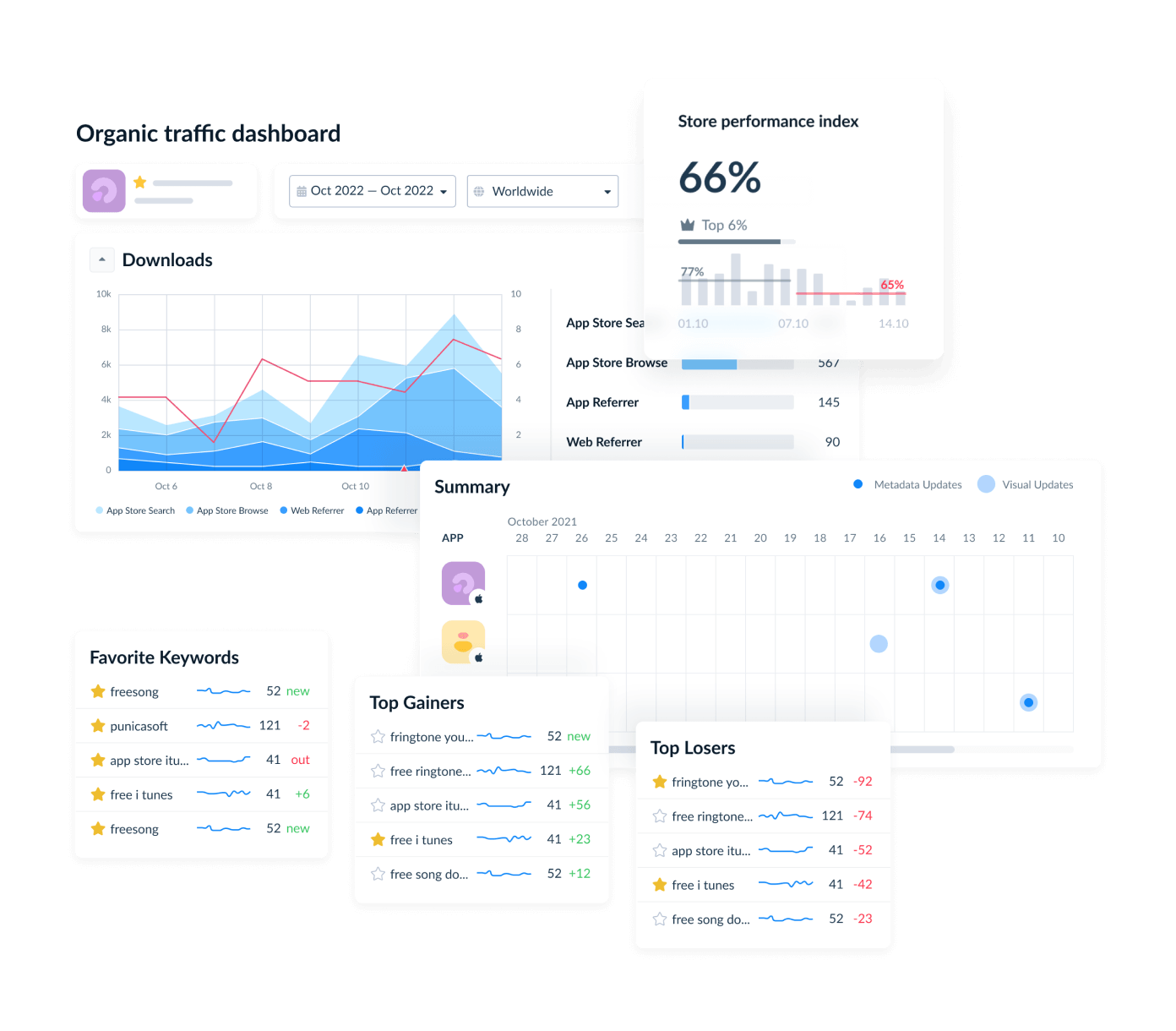
AppFollow is an ASO tool for teams that can’t afford to notice a ranking drop three weeks late. App developers use it to see what changed after a release. Publishers use it to manage portfolios across stores and countries. Marketers use it to connect keyword visibility, reviews, ratings, and competitor moves before organic installs start sliding.
In 2026, app store optimization is no longer one metadata refresh and a hopeful screenshot test. Search is more semantic. Reviews shape conversion. Localization decides whether the same app feels obvious in Germany, Brazil, or Korea. If AI discovery pulls from your listing, reviews, and web presence, messy signals get expensive fast.
Here’s the AppFollow stack I’d put under this ASO news workflow:
- ASO Tools to monitor app visibility, keyword opportunities, rankings, and store performance.
- Keyword Tracking to build a semantic core and catch ranking movement after metadata updates.
- Competitor Apps to see rival keywords, metadata changes, ratings, and ASO patterns before they become your traffic problem.
- Semantic Analysis to turn reviews into topic, sentiment, and product-message insights.
- Alerts & Reports to get rank, review, rating, and featuring changes in Slack or email.
cta_get_started_yellow