Scaling Player Connection With the Help of AI and the Human Touch


Table of Content:
Two billion downloads is a lot of people (downloads too). If we are to stretch our imagination, that's roughly a quarter of humanity who at some point decided they wanted to move colorful blocks around their phone screen, solve a Sudoku, or piece together a jigsaw puzzle.
When Easybrain hit that milestone last year, they faced a problem that sounds like a humble Silicon Valley brag but is a nightmare: how do you make so many people feel heard when they're all talking at once?
Not an army of support agents or building the world's most sophisticated chatbot, nice as that sounds. Understanding that AI should amplify human connection, not replace it, is where the solution lies.
The great disconnect
Here's what happens when a mobile game scales from millions to billions of users. First, the reviews start pouring in like water through a broken dam. Thousands every month, across different stores, in dozens of languages, each one a cry for attention. Some players are furious because level 347 is impossible. Others write love letters to your sudoku algorithm. A surprising number want to tell you about their grandmother, who also plays. Then there are the ones who just type "good game" and give you one star, which is its own special kind of head-scratcher.
The industry's default response to this avalanche of feedback is predictable: automate everything. Set up templates. Let the machines handle it. Speed over substance. Efficiency in everything.
But games aren't productivity apps or banking software. When someone spends three hours trying to beat a level only to have the app crash at the last second, they want someone to understand their pain, feel like their frustration matters to another human being who gets why losing progress in a game you've invested time in stings.
This is where most companies get it wrong. They treat support like a cost center to be optimized rather than an extension of the game experience itself. But what if support could be part of the magic instead of just damage control?
Rolling out the red carpet for the hybrid approach
Veronica Cherenkova, Support Lead at Easybrain, doesn't see AI as a replacement for human touch but as a tool that helps humans be more human. A subtle distinction that makes all the difference when you're dealing with player emotions at scale.
The approach is simple: use AI to handle the mechanical parts of support so humans can focus on the parts that require real humanity. AI can translate, categorize, summarize, and prepare draft responses. It can spot patterns across thousands of reviews and flag critical issues before they become full-blown crises. What it can't do is understand why a 73-year-old player from Nebraska is upset that the color scheme changed in the latest update and how that connects to their daily routine of playing sudoku with their morning coffee.
When you're producing 68,000 replies per year (about 185 every day) with a team that could fit in a small conference room, you need to be smart about metrics. Most companies track reply rate and response time, and that’s it. Easybrain tracks something more interesting: reply effect, which measures how much a rating improves after someone gets a response, the impact of human connection.
Currently, 35% of their replies use AI assistance, but only 2-3% are fully automated. The rest go through human hands before reaching players. Easybrain operated on manual replies for years, and only recently, with AppFollow's new capabilities, started carefully introducing automation while maintaining their quality standards. Their reply effect sits at +0.43, meaning ratings consistently improve after players receive responses. Focusing on negative reviews, they reply to the vast majority.
What makes Easybrain special is that they maintain world-class ratings regardless of whether it's a brand-new app or one of their established titles. With thousands of reviews monthly across 50 apps, they still achieve 45% five-star ratings. This doesn't mean they don't get one-stars; they get plenty, much like anyone else out there. But they've built a system where every voice counts, especially the detractors. Each negative review becomes an opportunity to show they're listening and turn feedback into product improvements.
Lost in translation (but not really)
Language is where things get really interesting. Google Play reviews tend to be short and sweet, heavy on the positivity, light on the details (500 character limit is in place, after all). You see lots of brief feedback focusing on highlights, which leads to higher overall ratings. App Store reviews sometimes read like dissertation abstracts, complete with detailed critiques and philosophical musings on game design.
Longer, more thoughtful reviews come with greater proportions of critical feedback and negative sentiment, resulting in more balanced but often lower ratings. Despite having only 30% five-star reviews on App Store compared to much higher percentages on Google Play, Easybrain still maintains strong average ratings across both platforms.
Then there's the language barrier.
When someone writes a review in Korean complaining about a bug, and you respond in broken Korean that sounds like it was written by a caffeinated robot, you've just made things worse. Easybrain's solution is elegant: AI handles the translation, but humans verify the tone and cultural context before sending. It may seem silly, but telling someone to "have a nice day" might be perfectly appropriate in American English, but could come across as dismissive in other cultures.
When support agents can respond in the player's native language with the right tone, whether that's formal Japanese, casual Brazilian Portuguese, or with polite-but-direct communication preferred in Northern Europe. AI makes this possible at scale, humans make it feel genuine.
Case study
One of the most instructive examples from Easybrain's playbook is the Art Puzzle rating recovery story. Art Puzzle experienced a noticeable dip in ratings, driven by various factors. Rather than panic, Easybrain treated this as a signal to review feedback more closely.
Using AppFollow's full toolkit (ratings analysis, AI Summary, tags), they analyzed the feedback to understand what users were struggling with. The team rapidly iterated based on this intelligence, pushing fixes and improvements at breakneck speed.
As Easybrain fixed issues and new positive reviews poured in, the rating didn't just recover, it shot up dramatically. From December 2024's 4.17, they climbed to 4.2 by March 2025, then rocketed to 4.47 by September 2025.
The spam wars and other adventures
Not all feedback is created equal. For every heartfelt review about how your game helped someone through chemotherapy (these are real, and they'll make you reconsider every cynical thought you've ever had about mobile gaming), there's spam about cryptocurrency, gibberish from bots, and reviews that are clearly meant for completely different apps.
Easybrain banks on AppFollow's "Report a Concern" system is a masterclass in selective automation. Clear violations like spam or offensive content get automatically flagged and reported to app stores. Edge cases that require human judgment go to real people, with this system configured so effectively that 85% of spam gets removed, compared to the industry benchmark of 20-30% of inappropriate reviews removed and keep their review sections clean without accidentally nuking legitimate criticism.
Review sections are often the first thing potential players check. If they're full of spam and nonsense, even a great game looks sketchy. If they're too sanitized, they look fake. Finding the balance requires both algorithmic precision and human intuition.
The tools that make it work
Behind Easybrain's hybrid approach sits AppFollow's suite of AI features, each one designed to handle a piece of the support puzzle, carefully calibrated to preserve the human element while eliminating the soul-crushing repetition that makes support agents question their life choices.
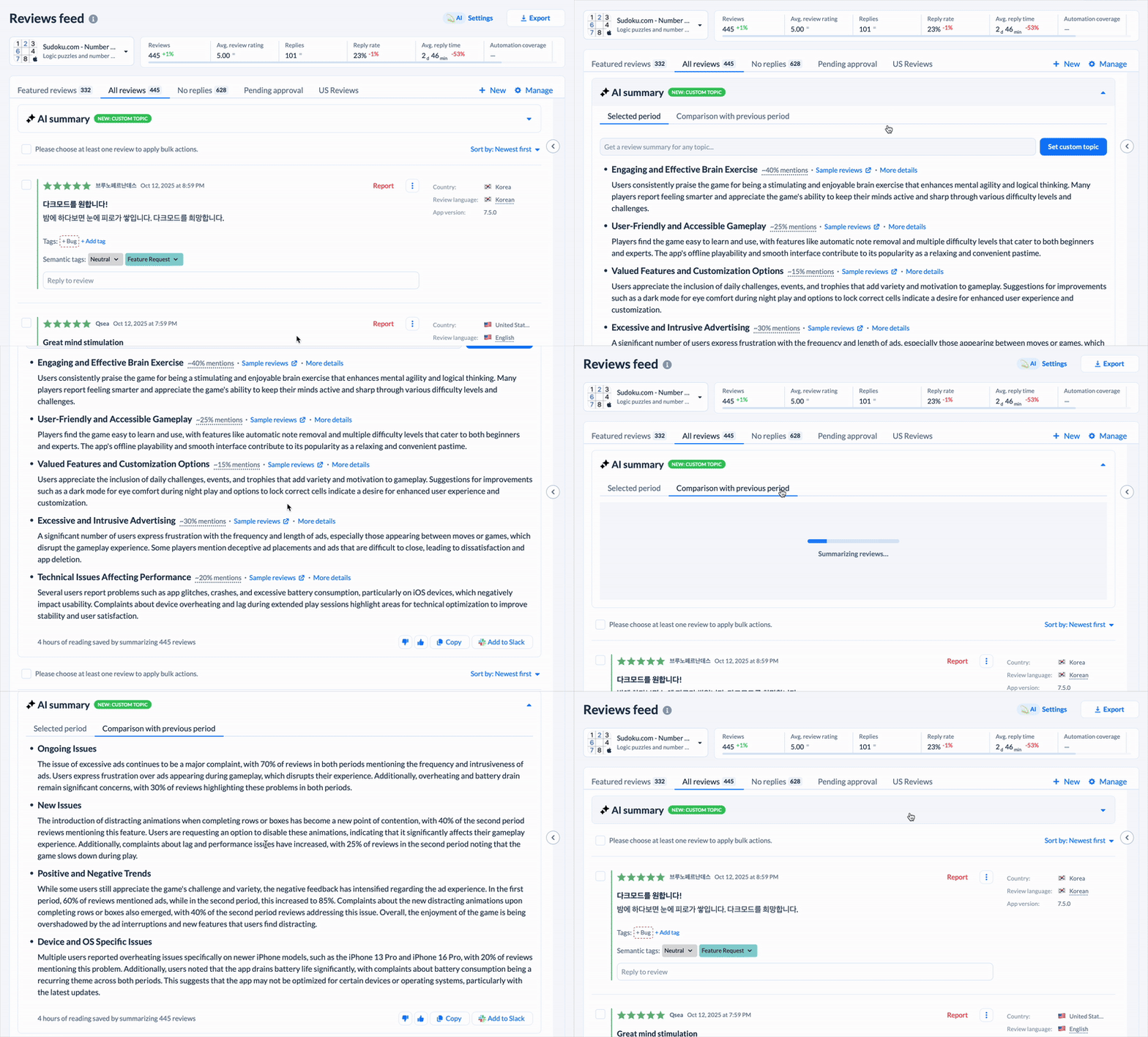
AI Summaries, to start with: instead of reading through hundreds of individual reviews, support teams get instant overviews of what players are saying right now. The AI digests reviews by region, by topic, by whatever filter you need, and tells what’s going on. The summary updates dynamically when you change filters, so you can zoom in on positive reviews from France or negative feedback about level difficulty without drowning in data.
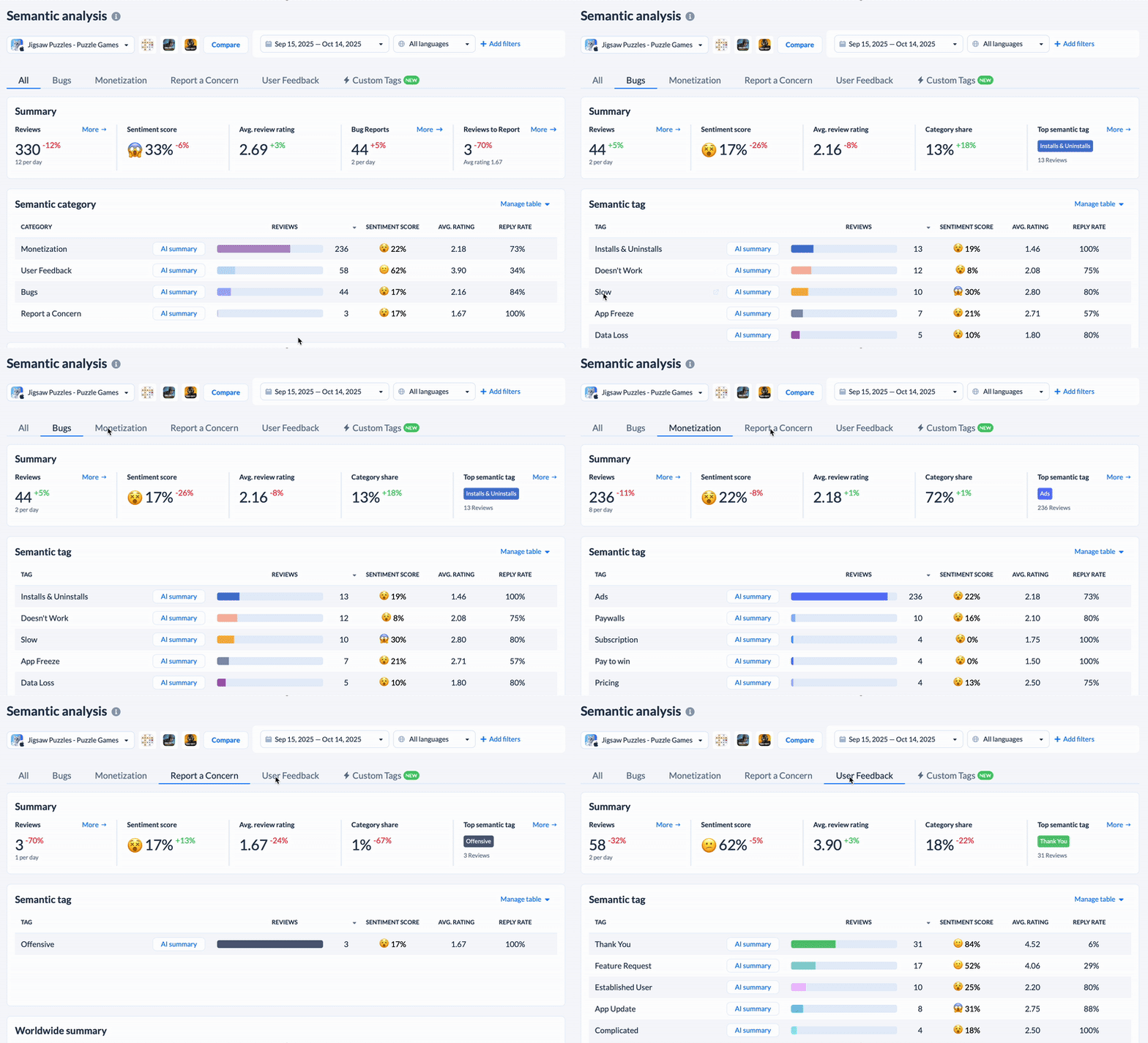
AI Tags: every review gets automatically tagged based on its content. Bug report, feature requests, praises for graphics, complaints about ads, you name it. When 500 reviews suddenly get tagged with "login issues," you know you have a problem. When "love the new character" tags spike after an update, you know what's working. The beauty is that tags run every five minutes, creating a real-time map of player sentiment that would be impossible to maintain manually.
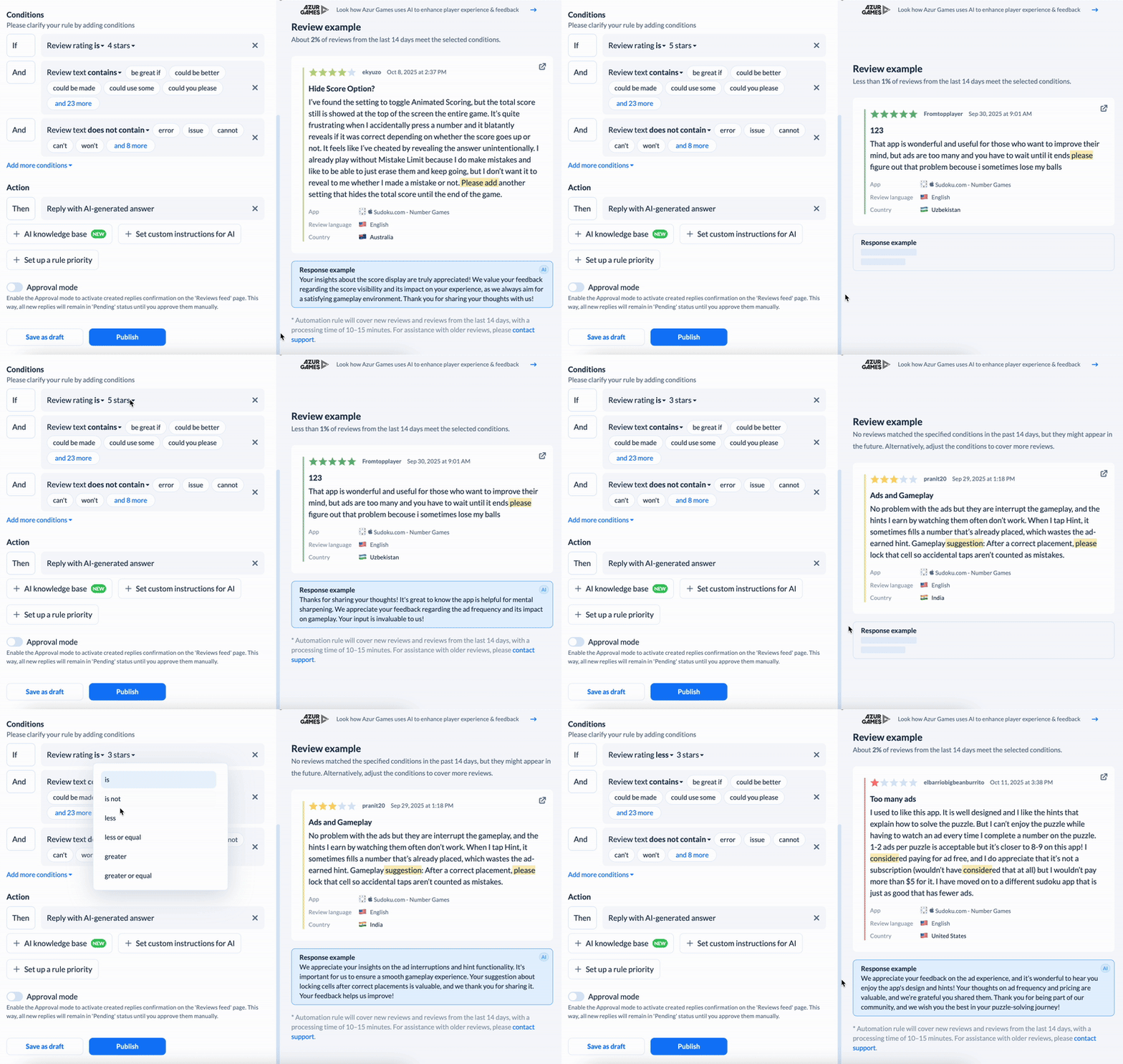
AI Replies are where things get interesting. The system analyzes tone and content, then generates personalized responses that actually match what the player is saying. Angry review gets an apologetic, understanding response. Happy player gets enthusiasm matched to their energy. These are suggestions, not automatic sends (although that can be set up too). A human reviews, adjusts, adds that little bit of context that makes the difference. The AI handles the heavy lifting of crafting grammatically correct, tonally appropriate responses. Humans then add the soul.
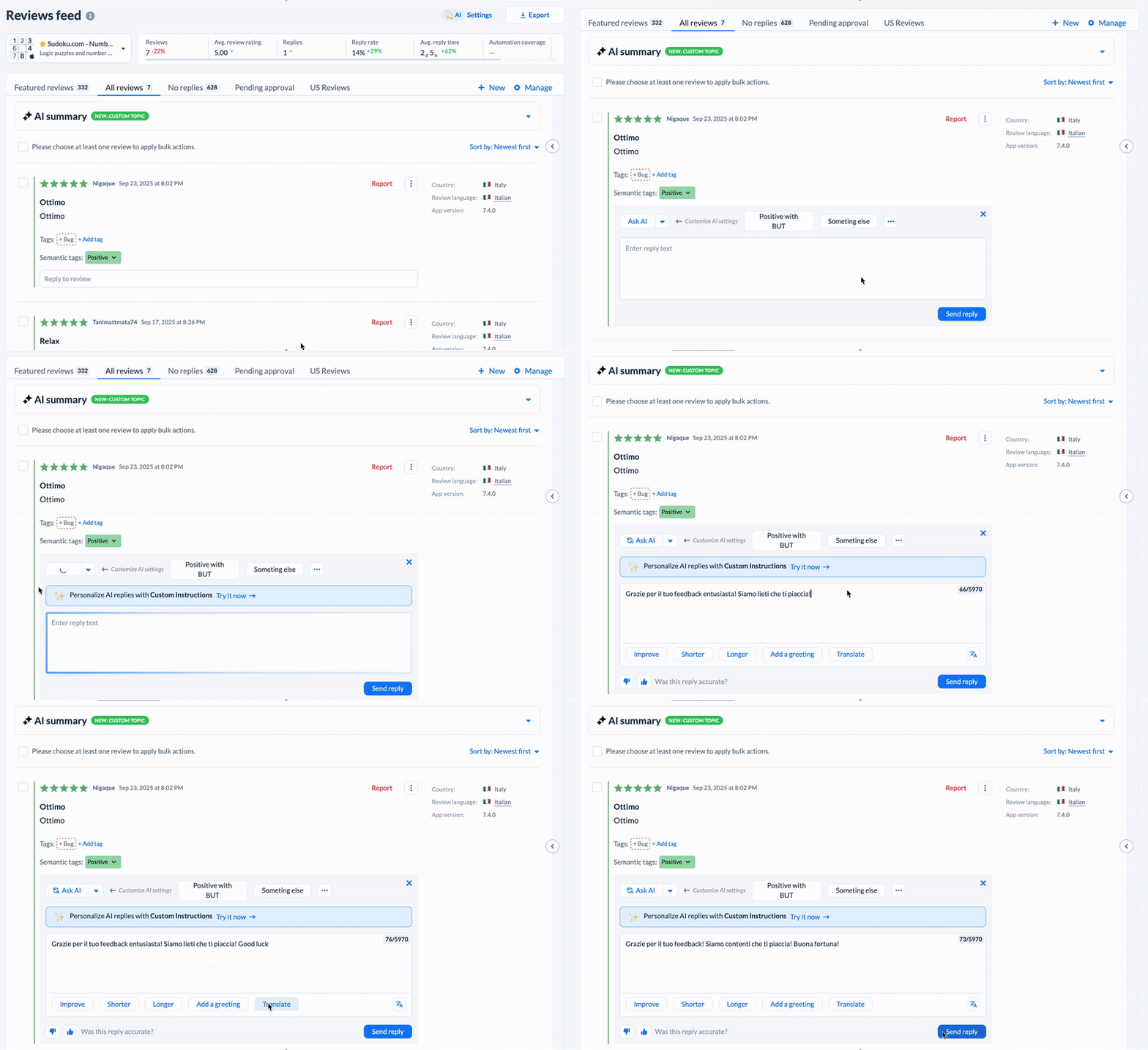
AI Translation breaks down language barriers without breaking the emotional connection, because it's one thing to translate words but another to translate meaning, context, and emotion across cultures. The AI handles the linguistic mechanics, converting Korean frustration into English words or Spanish praise into German syntax. But translation without cultural awareness is not enough. So humans verify that the translated response makes sense in context, that the tone translates along with the words, and that you're not being too casual with formal cultures or too stiff with informal ones.
Afterword
When your player base could populate a small country, every design choice becomes a statement about what matters. Do you optimize for efficiency or empathy? Speed or satisfaction? The answer, as Easybrain demonstrates, is that you don't have to choose. You just have to be smart about which tool you use for which job.
AI isn't the enemy of human connection. Used correctly, it's the infrastructure that makes human connection possible at previously impossible scales. At the end of the day, games are about human experiences. The joy of solving a puzzle. The frustration of a difficult level. The satisfaction of improvement. The brief escape from whatever else is going on in life.
The machines can translate the words. Only humans can understand what they really mean.